
Wildebeest Worth Watching
“Every morning was full of new excitement - sometimes the lion, sometimes the giraffe, sometimes the wildebeest running away again.
The skills of the guides are really commendable. They not only show animals, but also tell their stories.”
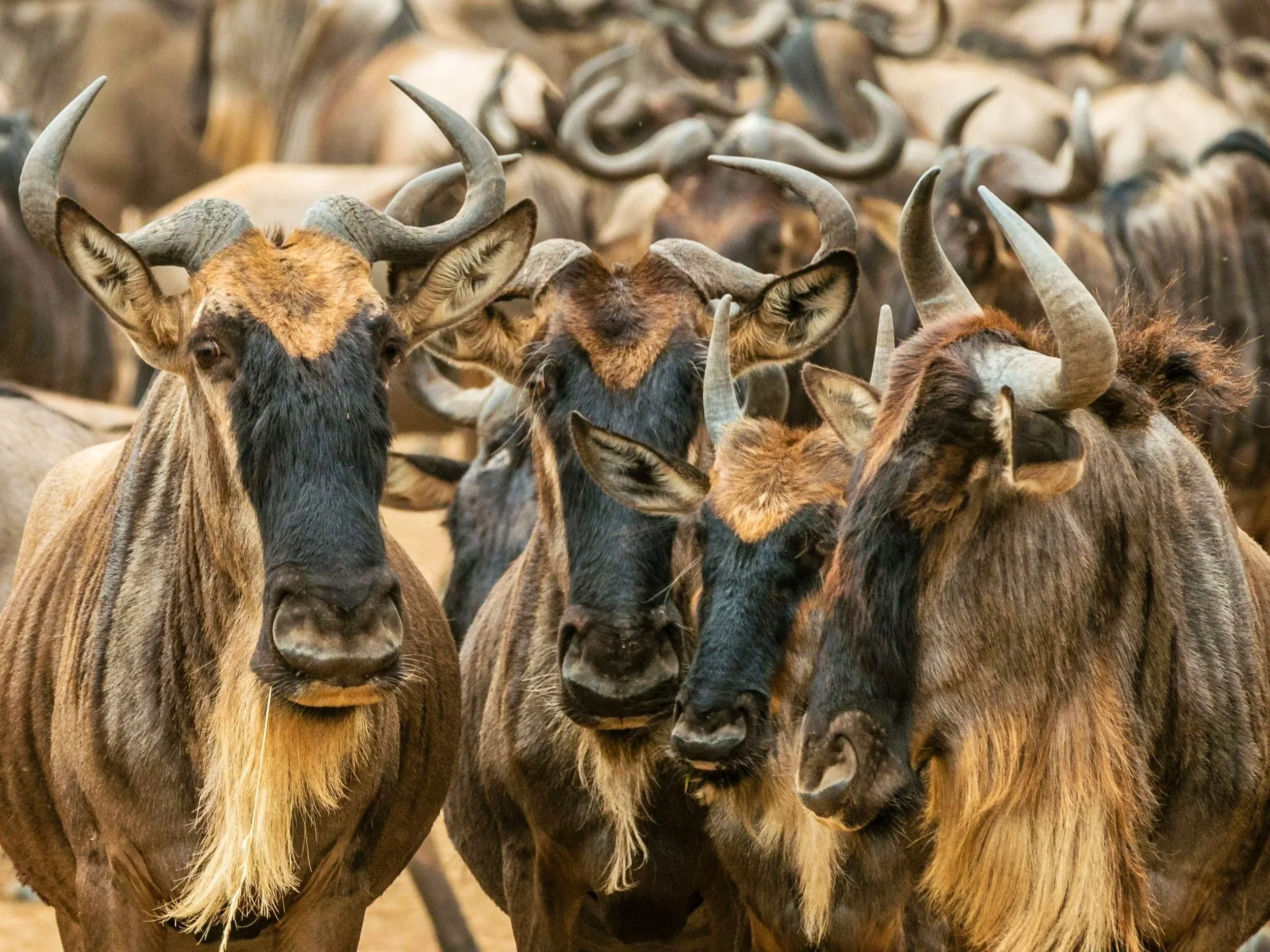
It's easy to become focused on the most famous moments of the Great Migration, but some of the most rewarding experiences come from simply watching the wildebeest themselves.
Photo Credit to Sutirta Budiman
Amazing Facts About Wildebeest
They're built for long-distance travel. Wildebeest have powerful legs and an efficient, sturdy build that allows them to travel extraordinary distances in search of fresh grazing and water. Their annual movements are driven largely by rainfall, grass, and water availability rather than a fixed calendar.
They're surprisingly fast. Despite their somewhat awkward appearance, wildebeest can run at impressive speeds, an essential ability when escaping predators or keeping up with a moving herd.
Newborn calves are incredibly quick. During the calving season, wildebeest calves can stand and begin moving within just minutes of birth. This remarkable ability is essential when predators are nearby and the herd is constantly on the move.
They're an important part of the Serengeti ecosystem. The huge herds provide food for predators including lions, cheetahs, hyenas and crocodiles, while their grazing influences the grasslands they move through.
They communicate constantly. Herds aren't simply masses of animals moving randomly. Wildebeest use vocalizations, body movements, and visual cues to communicate with one another, helping maintain group cohesion as thousands of animals move together.
Moyo Camp Warangi: Wildebeest in the Central Serengeti
Moyo Camp Warangi is nestled in the Seronera Valley, an area known for year-round wildlife thanks in part to permanent water sources. Its central location provides access to different migration areas as the seasons change, while resident wildlife ensures there is plenty to see even when the main herds are elsewhere.
During January–March, the migration's calving season takes place farther south, where hundreds of thousands of wildebeest calves are born over a few weeks. As the herds move northward, the Central Serengeti becomes increasingly important, offering opportunities to watch wildebeest moving through the plains alongside zebras and the predators that follow them.
Warangi is particularly rewarding for guests who enjoy watching animal behavior rather than simply checking animals off a list. Your guide can help you notice when a herd is becoming restless, why animals suddenly begin running, or how predators use concentrations of wildebeest to their advantage.
Moyo Camp Hembe: Wildebeest Among a Diverse Landscape
Moyo Camp Hembe offers a different perspective on wildebeest, with a location between the Central Serengeti and Western Corridor. Its combination of open grasslands, woodlands, granite kopjes, and seasonal waterways supports abundant resident wildlife throughout the year.
During April and May, the surrounding Central and Western Serengeti becomes especially lush following the long rains, creating beautiful green landscapes and fewer-crowded safari conditions. Later in the year, as the migration moves through the Central and Western Serengeti, guests may encounter enormous herds of wildebeest and zebras moving through the surrounding plains.
Hembe can be particularly interesting for guests who want to see how the migration interacts with the resident ecosystem. A game drive might include wildebeest herds, elephants, giraffes, impalas and zebras, followed by lions resting on a kopje or cheetahs scanning the open grasslands for an opportunity.
Moyo Migration Camp Mara: Wildebeest at the Northern Frontier
For travelers dreaming of experiencing the migration in the Northern Serengeti, Moyo Migration Camp Mara offers a permanent base in the heart of the region. Its location provides shorter drive times to key Mara River crossing areas during the peak migration period.
June and July can bring the herds north toward the Grumeti River and eventually the Mara River, while August through October is traditionally associated with the dramatic northern migration and potential Mara River crossings. The timing of crossings is naturally unpredictable, however, because the wildebeest respond to weather, water levels, grazing conditions, and their own instincts.
And even if the herds aren't crossing a river, watching thousands of wildebeest gather, graze, communicate and move across the northern plains can be an extraordinary experience. From Mara, guests can experience the migration as an ongoing natural phenomenon rather than simply waiting for one dramatic crossing.

The Great Migration may be famous for where the wildebeest are going, but it's just as fascinating to stop and appreciate these animals... t
heir determination, social behavior, speed and constant movement.
Photo Credit to Valeria Rossi
The wildebeest are waiting for you at Moyo Tented Camp.