
“The camp is very well located next to a river where we can see herds of animals on the other bank. Buffalo, elephants, lions, etc.
We had a visit from buffalo at night in our camp, but we always felt very safe. ”
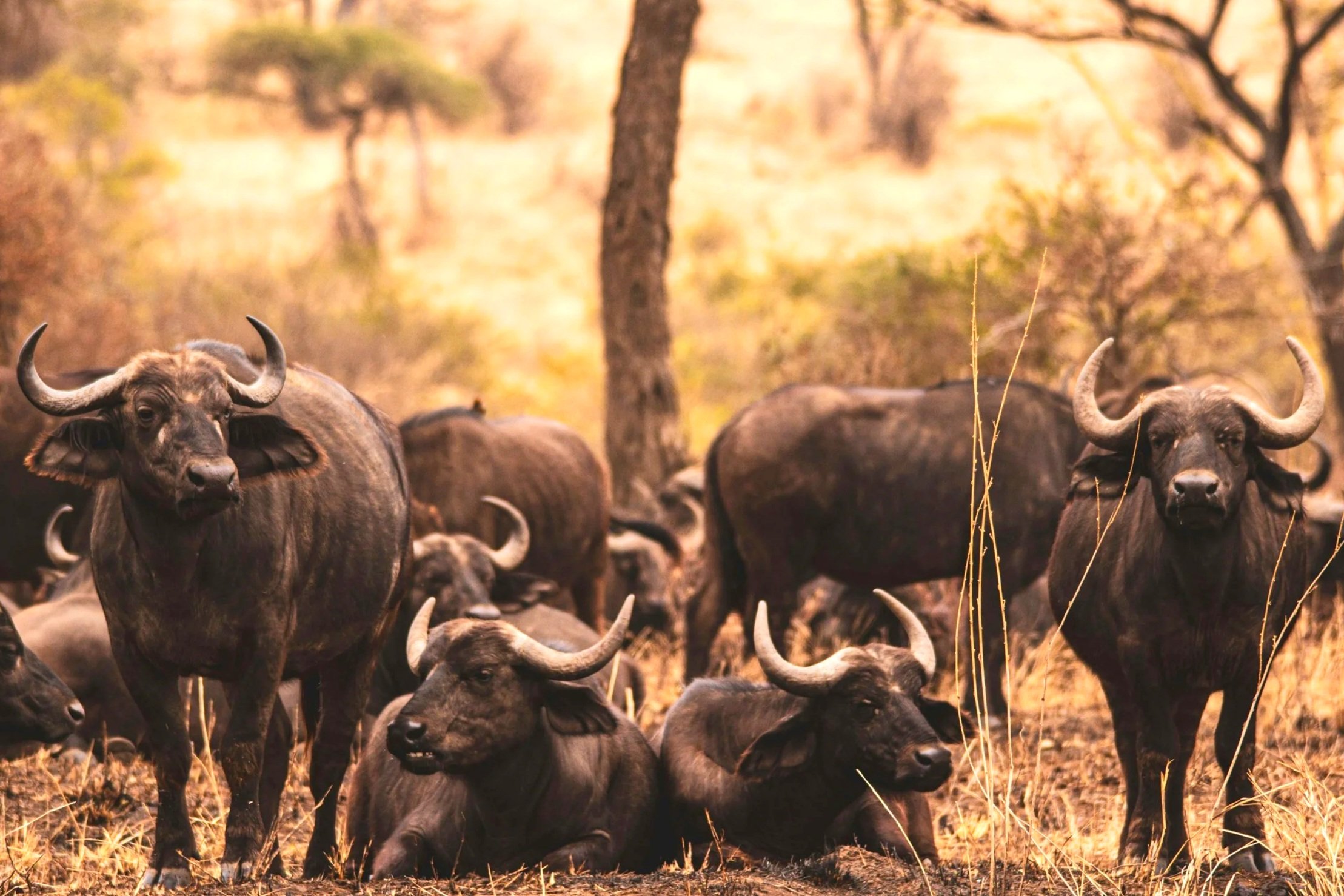
In Tanzania, African buffalo are commonly called nyati (pronounced NYAH-tee) in Swahili. You may also hear the name mbogo, another Swahili word for buffalo that is used across parts of East Africa.
Photo Credit to Denice Alex
About African Buffalo
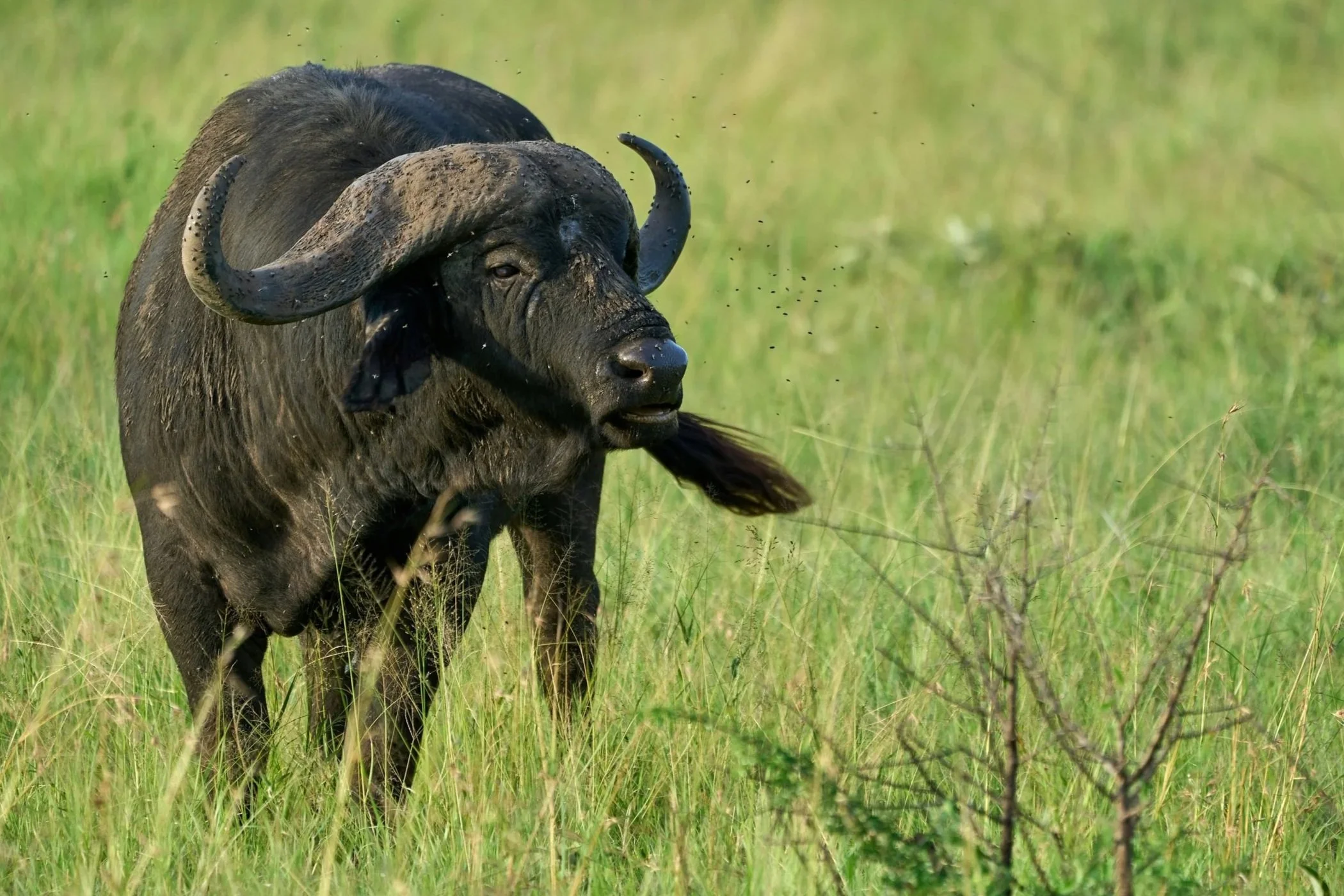
They have an impressive set of horns. African buffalo are instantly recognizable by their heavy, curved horns. On mature bulls, the horns grow together at the base to form a thick protective shield called a boss, making their heads particularly formidable.
They are among Africa's most socially intelligent grazers. Buffalo live in herds that can range from a handful of individuals to several hundred. Herds offer protection from predators, particularly lions, and individuals can coordinate their movements when threatened. Older males, known as dagga boys, often spend time in smaller bachelor groups or on their own.
They have a complicated relationship with lions. Although lions are among their main natural predators, buffalo are not easy prey. A healthy adult can weigh more than 900 kilograms, and the herd may work together to defend vulnerable members. Buffalo have even been observed chasing lions away from calves or helping herd members escape an attack.
They rely on water and wallowing to stay comfortable. Buffalo need regular access to water and frequently gather around rivers, pools, and wetlands. They also enjoy rolling in muddy patches, which helps them cool down and may provide relief from biting insects.
Their calves can stand shortly after birth. Like many large grazing mammals, buffalo calves are relatively mobile soon after being born. Staying close to their mothers and within the protection of the herd is essential during their vulnerable early months.
African Buffalo Safari Viewing Tips
African buffalo can be spotted throughout the year in Serengeti National Park, but their movements, herd sizes, and visibility change with the seasons. Here are a few tips to help you make the most of your buffalo sightings on a Tanzania safari.
Look near rivers and permanent water sources. Buffalo need regular access to water, making riverbanks, wetlands, and watering holes excellent places to look. During the hotter parts of the day, you may find them resting in the shade or cooling off in muddy pools. Keep an eye out for oxpeckers perched on their backs, feeding on ticks and other parasites.
Visit during the dry season (June–October). As seasonal water sources disappear and grass becomes less abundant, buffalo often gather in larger concentrations around permanent rivers and water sources. Shorter grass and thinner vegetation can also make herds easier to spot. This is an excellent time for wildlife photography, particularly when large groups gather along riverbanks.
Look for newborn calves during the green season (November–May). Unlike the famous wildebeest calving season in January and February, African buffalo have their own reproductive cycle. In the Serengeti, buffalo births peak during the height of the long rains, particularly from March to May. This is a wonderful time to look for young calves staying close to their mothers and gradually becoming familiar with the herd. Fresh grass also provides excellent grazing conditions for nursing females.
Watch the edges of large herds. When searching for buffalo calves, pay particular attention to the edges of a herd, where younger animals may be easier to distinguish from the adults. Calves are often smaller, lighter in color, and stay close to their mothers. You may also spot protective adults standing between the young and potential threats.
Don't overlook solitary bulls. Not every buffalo sighting involves hundreds of animals. Older males, sometimes called dagga boys, often separate from the main breeding herds and spend time in smaller bachelor groups or alone. Look for them resting near water or grazing along the edges of woodland.
Be patient and give them space. Buffalo are powerful wild animals and can be unpredictable, particularly when calves are nearby. Always observe them from a safe distance with your professional safari guide. Rather than focusing only on photographs, take time to watch how the herd communicates, grazes, rests, and responds to its surroundings.
African Buffalos at Moyo Tented Camp
Moyo Camp Warangi – Central Serengeti
Located in the Seronera Valley near the Warangi River, Moyo Camp Warangi is particularly well-positioned for exploring riverine habitats and permanent water sources. These areas provide valuable resources for buffalo, especially during the dry season, when herds may gather near the river to drink and graze. Keep watch along the riverbanks and surrounding grasslands for mixed herds, young calves, and solitary bulls.
Moyo Camp Hembe – Central and Western Serengeti
Moyo Camp Hembe offers access to the quieter landscapes between the central and western Serengeti. Its surrounding plains, woodland habitats, and nearby kopjes provide a variety of environments to explore during game drives. Look for buffalo grazing in open areas, moving between feeding grounds and water sources, or resting in the shade during warmer hours. This location is also appealing for travelers who enjoy exploring less crowded wildlife-viewing areas.
Moyo Migration Camp Mara – Northern Serengeti
Situated in the northern Serengeti near the Mara River, Moyo Migration Camp Mara offers opportunities to explore the region's riverine habitats, rolling grasslands, and wildlife-rich surroundings. Buffalo are resident throughout the Serengeti ecosystem, so they can be encountered here beyond the seasonal movements of the Great Migration. During the dry season, pay particular attention to areas around permanent water, where buffalo may gather in impressive herds.
After an exciting day exploring the Serengeti, return to the comfort of Moyo Tented Camp, where spacious canvas tents, private ensuite bathrooms, refreshing hot showers, and warm hospitality make every evening special.
Photo Credit to Dmitrii Zhodzishskii
Behold the mighty buffalo for yourself.