
“Baboons do not go far from the place of their birth”
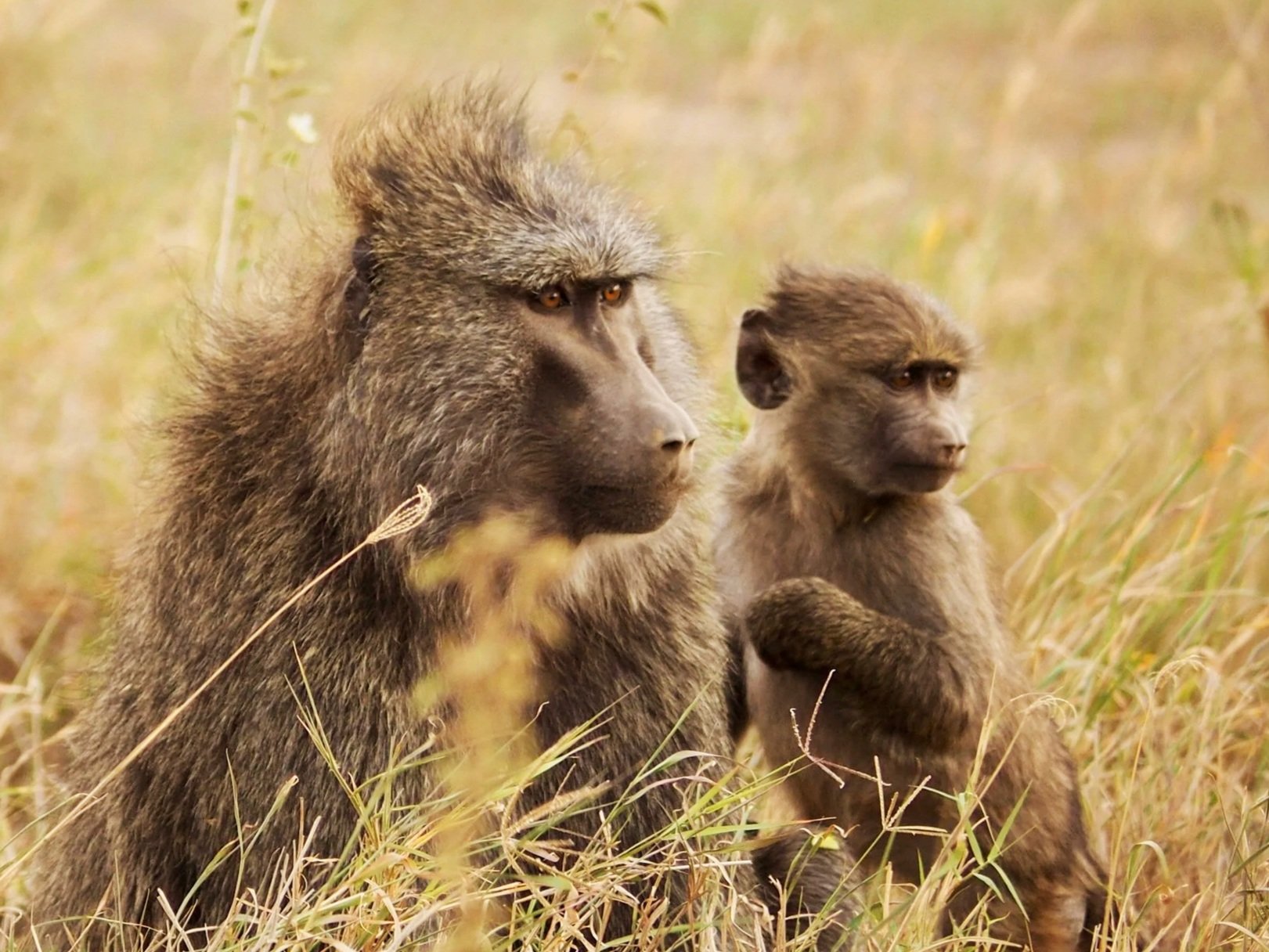
Baboons are among the Serengeti’s most entertaining primates, known for their expressive faces, complex social lives, and remarkable intelligence.
Whether you encounter a troop crossing a dirt road, grooming one another beneath an acacia tree, or foraging near camp, these curious animals offer a fascinating glimpse into the everyday lives of the Serengeti’s wildlife.
Photo Credit to Jorge Tung
Amazing Facts About Serengeti Baboons
They live in complex social groups. Baboons live in troops that can contain dozens of individuals, with established social relationships and hierarchies. Grooming helps strengthen friendships, maintain social bonds, and reduce tension between troop members.
They are remarkably intelligent. Baboons can learn from experience, solve problems, and adapt their behavior to changing circumstances. Their ability to recognize individuals and remember social relationships makes their communities particularly interesting to observe.
They have an incredibly varied diet. Baboons are omnivores, eating everything from fruits, seeds, roots, and grasses to insects and small animals. Their flexible diet helps them survive across different habitats and seasons in the Serengeti.
Their cheeks double as food storage. Baboons have expandable cheek pouches that allow them to temporarily store food while continuing to forage. This adaptation is especially useful when gathering food in exposed areas where they may need to move quickly.
They communicate in diverse ways. Baboons use vocalizations, facial expressions, body postures, and physical contact to communicate. From alarm calls warning of danger to the playful behavior of young baboons, their interactions reveal a sophisticated social world.
Young baboons learn by watching adults. Youngsters spend much of their time playing, exploring, and observing other troop members. Through these interactions, they gradually learn social rules, feeding behaviors, and how to respond to potential threats.
Why Baboons Are Interesting to Observe
Their social interactions are full of personality. Watching baboons groom one another, negotiate social relationships, or settle disagreements can be just as captivating as spotting larger wildlife. Each troop has its own dynamics, and patient observation may reveal interactions that are easy to miss at first glance.
Young baboons are natural entertainers. Juveniles often chase one another, wrestle, climb, and practice adult behaviors through play. Their energetic antics offer wonderful opportunities for wildlife photography, particularly when they interact with other members of the troop.
They are always on the lookout. Baboons spend much of their day alternating between feeding, resting, socializing, and watching their surroundings. Observing how they respond to a passing predator or an alarm call from another animal can provide insight into the interconnected wildlife community of the Serengeti.
Their adaptability is impressive. From open grasslands to woodland edges and rocky outcrops, baboons make use of a variety of habitats. Watching them forage and move through these environments reveals how resourceful they are in a landscape shared with numerous other species.
They offer a different perspective on the Serengeti. Safaris often focus on lions, leopards, elephants, and the Great Migration, but smaller behavioral moments can be equally rewarding. Spending time observing baboons encourages a slower, more attentive approach to wildlife viewing, where the experience is about understanding animal behavior rather than simply ticking species off a list.
Safari Baboon Safety Tips
Baboons are wild animals, and although they may appear relaxed around vehicles or established camps, they can react defensively if they feel threatened or become accustomed to receiving food from people. Respecting their space helps protect both visitors and wildlife.
Never feed baboons. Feeding encourages them to associate people with food, which can lead to persistent food-seeking behavior and potentially aggressive encounters. Even seemingly harmless snacks can create problems for both baboons and visitors.
Keep food securely stored. Baboons are opportunistic and can quickly learn to recognize bags, containers, and other items that may contain food. At camp, follow staff instructions about storing snacks and disposing of food waste, and never leave food unattended in accessible areas.
Keep a safe distance. Never approach, surround, touch, or attempt to photograph a baboon at close range. If one approaches you, remain calm, avoid sudden movements, and follow your guide's or camp staff's instructions.
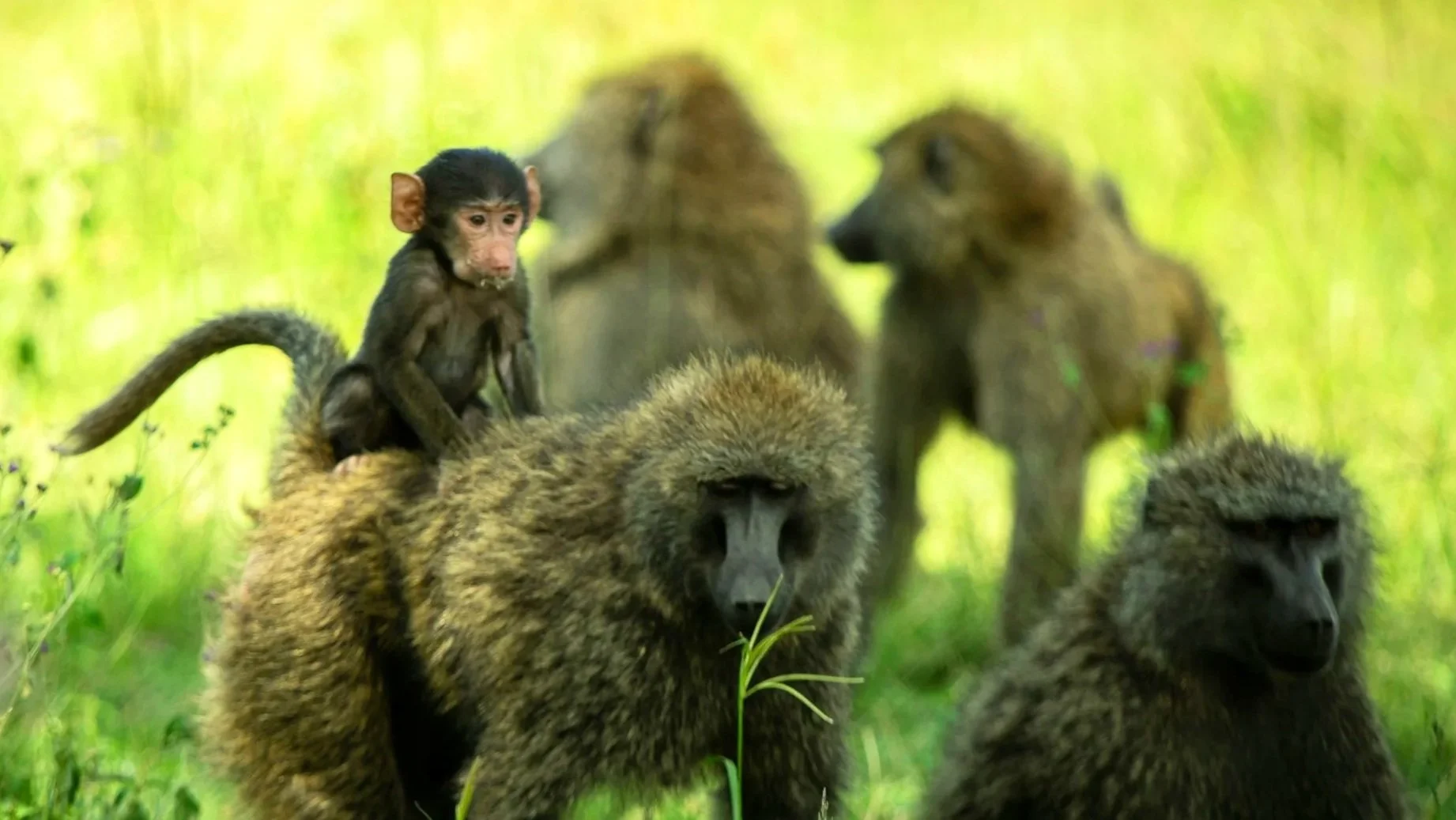
Never attempt to touch or hold a baby baboon. Young baboons may look approachable, but their mothers and other troop members may respond defensively if they perceive a threat. Admire young animals from a respectful distance and never place yourself between a youngster and the troop.
Follow your guide's instructions during game drives. Stay inside the safari vehicle unless your guide explicitly indicates that it is safe to leave. Avoid shouting, sudden movements, or attempts to attract an animal's attention. Your guide understands local wildlife behavior and can help you enjoy the encounter responsibly.
Be mindful around camp. Baboons may investigate outdoor dining areas, verandas, or other places where food is present. Do not try to chase them away yourself, block their escape routes, or retrieve food from an animal. Alert camp staff if baboons enter an area where guests are eating or gathering.
Never leave belongings unattended. Bags, sunglasses, food containers, and other objects may attract a baboon's attention. Keep personal items secured and avoid displaying food or carrying snacks openly when baboons are nearby.
At Moyo Tented Camp, unwind with modern comforts and thoughtful amenities after a day of wildlife encounters in the Serengeti.
Experience baboons in their element.