
Fierce Honey Badgers
“Some say honey badgers don’t care, but that reputation is hardly fair. In fact, these medium-size members of the weasel family have super-sized attitudes.”
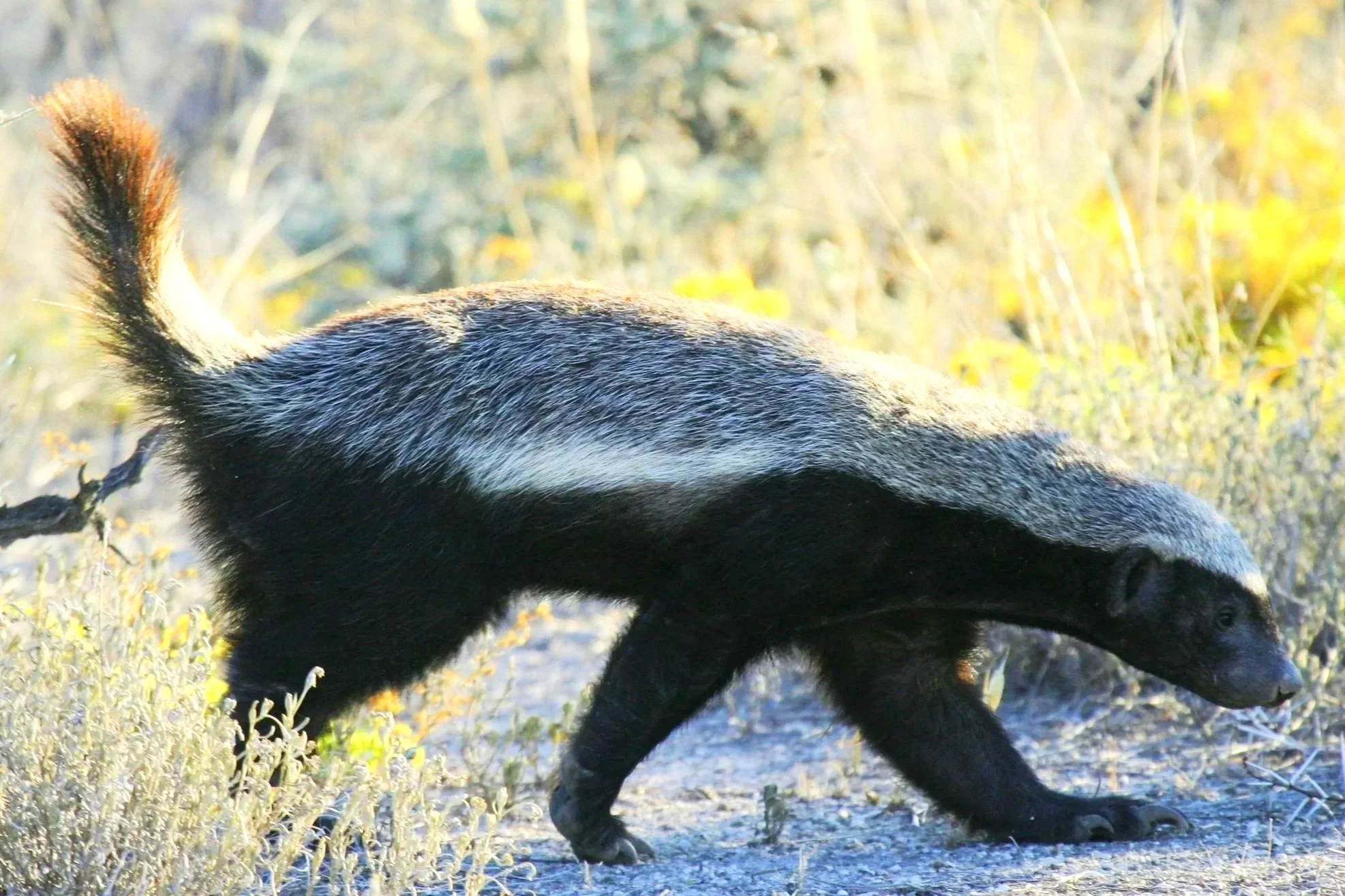
Honey badgers face threats in parts of Africa from hunting and human-wildlife conflict. Staying at Moyo Tented Camp helps support Serengeti National Park conservation through park fees that contribute to Tanzania National Parks (TANAPA), protecting these amazing animals.
Photo Credit to Mitch Mitchell
Amazing Honey Badger Facts
They have incredibly tough skin. A honey badger's thick, loose skin provides protection from bites, stings and scratches. It can even twist within its skin when grabbed, giving the animal an opportunity to turn around and defend itself.
They really do love honey. Honey badgers are famous for raiding beehives for honey and bee larvae. Their thick skin helps protect them from the inevitable bee stings.
They eat an incredible variety of food. These opportunistic omnivores may eat rodents, reptiles, birds, eggs, amphibians, insects, small mammals and fruit, adapting their diet to whatever is available.
They are exceptional diggers. Powerful forelegs and long claws allow honey badgers to excavate burrows and dig into the ground in search of prey. They may also use abandoned burrows for shelter.
Why Are Honey Badgers Fascinating to See?
Honey badgers are fascinating to watch because of their active, curious and determined behavior. A sighting might reveal one digging energetically for prey, investigating a termite mound, sniffing out food or confidently exploring its surroundings. They are also remarkably persistent foragers, using their powerful claws and keen sense of smell to investigate potential food sources. Because they are usually solitary and can move quickly through grass or disappear into a burrow, watching one go about its business can make for a particularly rewarding wildlife encounter.
On a rare occasion, you might even witness the honey badger's famously fearless side - a dramatic encounter with a snake, or defending itself when confronted by a larger predator.
3 Tips for Viewing Honey Badgers
1. Search near termite mounds and burrows. Honey badgers are powerful diggers and may investigate termite mounds, holes and other areas where they can find insects or small prey.
2. Look during cooler parts of the day. Early-morning and late-afternoon game drives can offer good opportunities to encounter honey badgers while they are active.
3. Watch the ground, not just the plains. Look carefully around rocky areas, woodland edges and taller grass where honey badgers may forage. Let your guide know you'd love to see one so they can keep an eye out for this elusive Serengeti resident.

Hopefully, you’ll spot a honey badger on your Tanzania safari, but no matter what the day holds, return to the comforts of Moyo Tented Camp because after days of adventure, small luxuries go a long way.
Photo Credit to Markus Kammermann
Are honey badgers on your safari wishlist ?