
Small but Mighty Mongoose
“To watch wildlife in its natural habitat is to witness life as it was meant to be.”
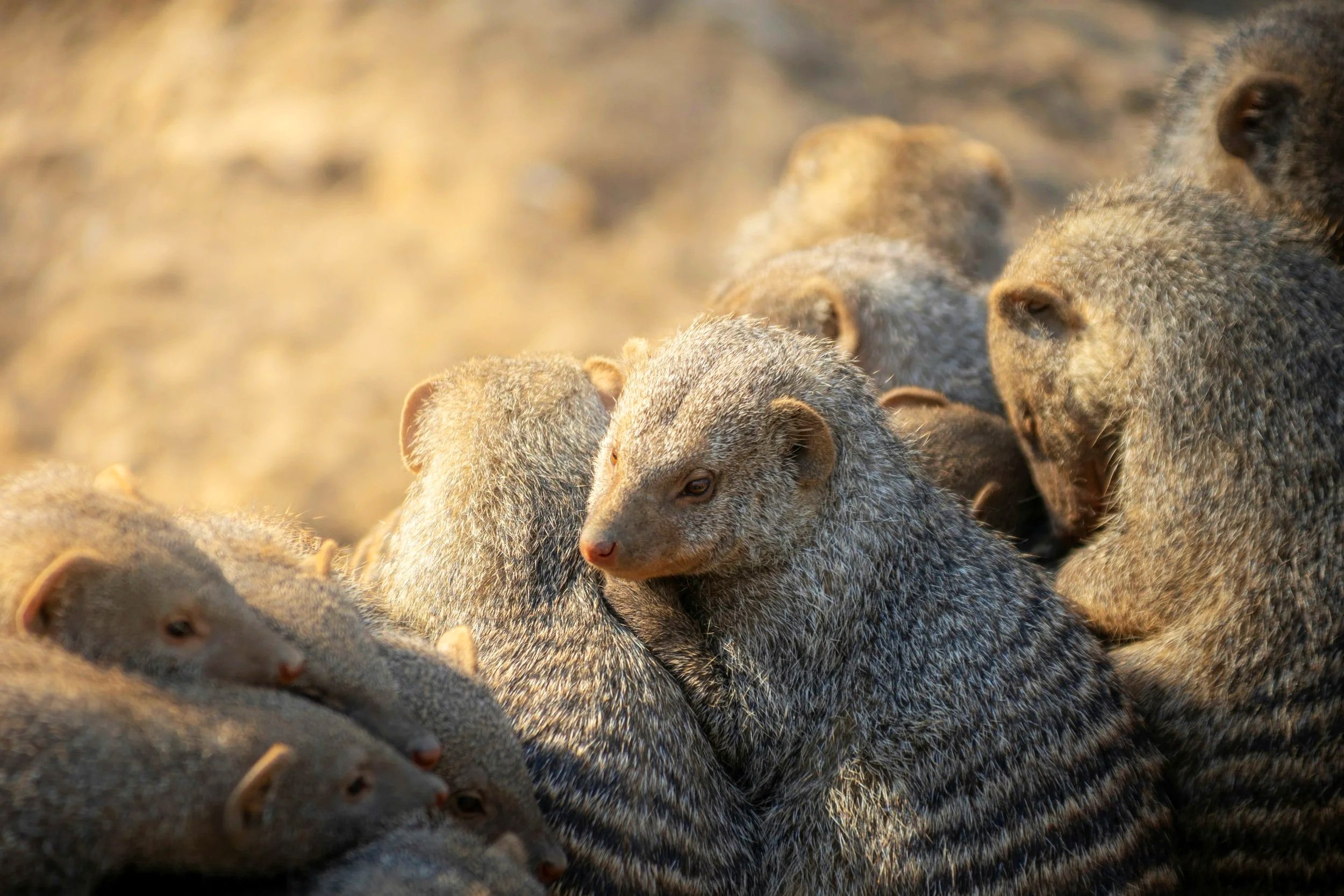
Not to be confused with meerkats, The Serengeti is home to several species of mongoose. Researchers documenting the Serengeti–Ngorongoro ecosystem have recorded at least seven species.
Photo Credit to Hongjin Wang
Mongoose vs. Meerkats: What's the Difference?
Despite their similar appearance and curious behavior, meerkats and mongooses are not the same animal. Meerkats are actually belong to the mongoose family, but they are a distinct species (Suricata suricatta) found primarily in southern Africa. One of the easiest ways to tell a meerkat from many other mongooses is their body shape and behavior. Meerkats are especially recognizable for standing upright on their hind legs to scan for predators.
And if you're visiting the Serengeti, you're looking for mongooses - not meerkats. Meerkats are not native to the Serengeti ecosystem.
3 Amazing Mongoose Facts
1. Yes, some mongooses really do eat snakes! Banded mongooses are known to eat snakes, along with insects, rodents, eggs, scorpions and other small prey. Their agility and quick reactions can help them tackle prey that would be dangerous for many other small mammals.
2. Baby mongooses are called pups. In highly social species such as banded mongooses, raising the next generation isn't left entirely to the mother. Multiple females may give birth around the same time, and members of the group help carry, protect and care for the young. With dwarf mongooses, older and non-breeding members also help babysit, feed and care for juveniles.
3. Some have sophisticated partnerships with birds. Dwarf mongooses have been observed foraging alongside hornbills. As the mongooses move through vegetation and disturb insects and other prey, hornbills can take advantage of the activity. The birds can also act as an early-warning system, giving alarm calls when they spot aerial predators.
Mongoose Species of the Serengeti
The banded mongoose is perhaps one of the most entertaining mongooses to encounter because it is highly social. Its name comes from the distinctive dark bands running across its back, making it relatively easy to identify once you know what you're looking for. Banded mongooses live in groups and spend much of the day foraging together. A group can move across the landscape in a surprisingly organized-looking procession, stopping frequently to dig, sniff and investigate potential food. They can also use termite mounds, rocky areas and other sheltered places as dens. There may be grooming, play, digging, chasing and plenty of communication happening within the group.
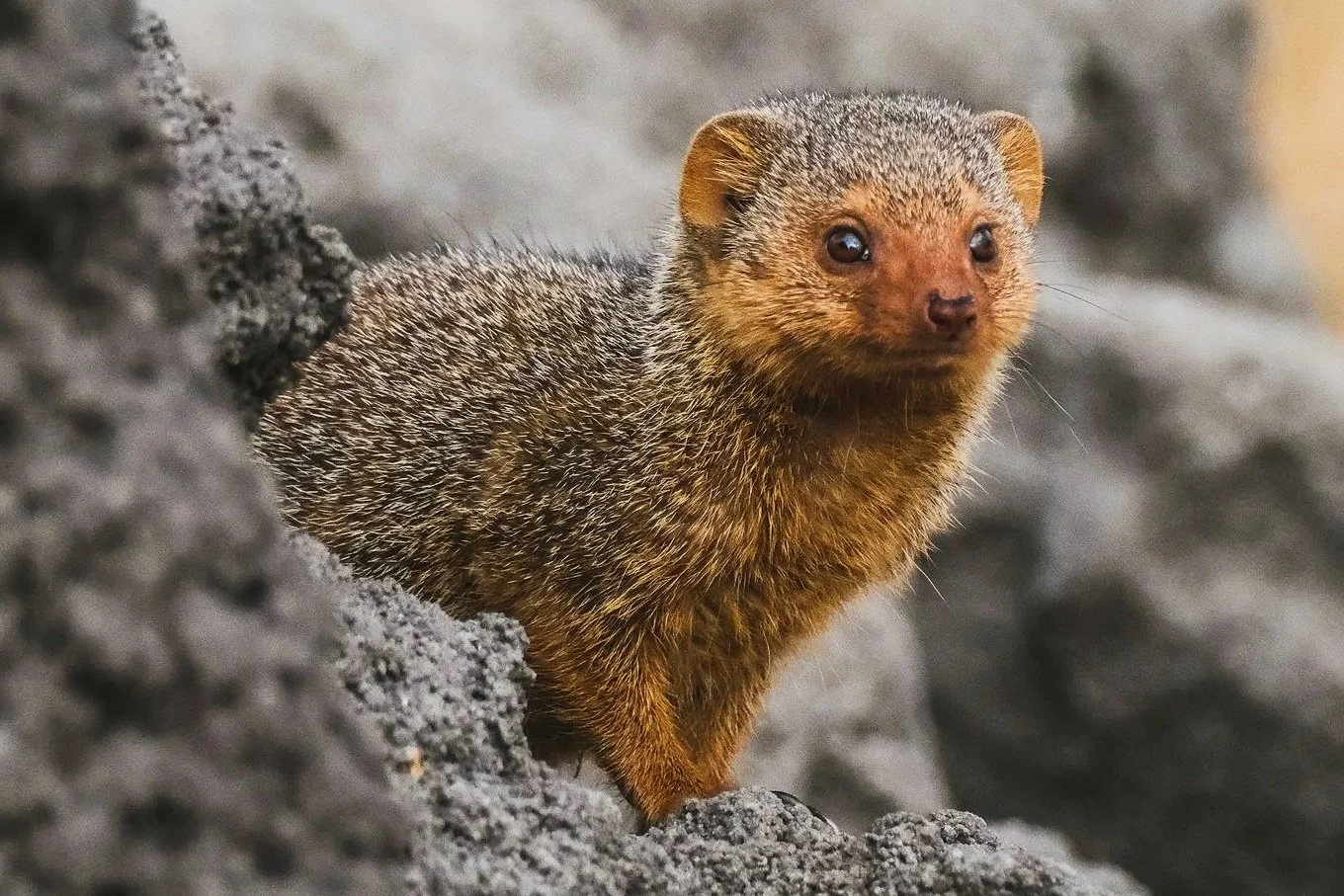
The dwarf mongoose is the smallest mongoose, one of Africa's smallest carnivores. Despite its size, it has a remarkably complex social life. Dwarf mongooses live in groups and are often associated with termite mounds, which can provide shelter and elevated positions from which individuals can watch their surroundings. Groups cooperate in raising young, and members take turns helping care for juveniles. One of the most entertaining things to watch is their alertness. While some members forage, another may pause and scan the surroundings. If danger approaches, the group can quickly disappear into cover. Dwarf mongooses have also been observed foraging alongside hornbills. The birds can benefit from insects and other prey flushed out by the mongooses, while the mongooses may benefit from the birds' alarm calls when predators are nearby.
The slender mongoose is quite different. Rather than traveling in a large group, it is generally seen alone or in pairs. With its long, slim body and long tail, it can move incredibly quickly through grass and vegetation. Slender mongooses are widespread in Africa and occur in the Serengeti ecosystem. The challenge is seeing one before it disappears. A fleeting glimpse of a slender mongoose crossing the road can be over almost as quickly as it began — which is exactly what makes a good sighting so exciting.
The Egyptian mongoose is another Serengeti species, although it can be an elusive sighting. It is associated with a variety of habitats, including areas near water and dense vegetation, and is generally seen alone or occasionally in pairs. Field guides note that in the Serengeti it can be encountered around areas such as kopjes in the southern part of the park, although sightings may be brief as individuals move between patches of vegetation.
White-tailed mongooses are primarily nocturnal, making them particularly interesting for guests staying in the park. Marsh mongooses are associated with wet habitats and waterways, while bushy-tailed mongooses are among the less frequently encountered species. All three have been documented within the broader Serengeti–Ngorongoro landscape.
Why Are Mongooses Hard to Spot?
Mongoose species are relatively small, move quickly and spend time in vegetation or around termite mounds and rocky areas. Some are solitary, while others travel in groups that can blend surprisingly well into the landscape.
An experienced Moyo guide knows that safari isn't just about looking for the largest animal in the landscape. A movement in the grass, an unusual gathering of birds, a flash of brown disappearing behind a termite mound or a group of animals crossing the road can all be clues that something interesting is nearby. And once you stop for a mongoose, you may find yourself watching for much longer than expected.
Tips for Spotting Mongooses on Safari
Look Around Termite Mounds
Termite mounds can be productive places to watch for smaller mammals, particularly dwarf mongooses. Their elevated position and underground spaces can provide both shelter and useful lookout points. Don't simply drive past a termite mound. Take a moment to scan around it.
Ask Your Guide
Mongooses are much easier to spot when you're not rushing. Ask your guide to keep an eye out for mongooses and slow down when driving through areas where smaller wildlife may be present. A mongoose crossing the road can disappear in seconds, and sometimes the only clue is a quick movement in the grass.
Explore Different Habitats
Different mongoose species favor different habitats. The Serengeti's mixture of open grassland, woodland, rocky kopjes, river valleys and other habitats gives several species opportunities to thrive. The broader Serengeti research shows that carnivore species occupy different habitats within the ecosystem, so paying attention to habitat can help guides narrow down what might be nearby. At Moyo Camp Warangi, the Seronera Valley and surrounding habitats provide opportunities to look for a wide variety of wildlife, including smaller predators and other species that favor areas around vegetation and waterways.
Take Advantage of Early Morning Drives
Many mongooses are diurnal, meaning they are active during daylight hours. Banded mongooses, for example, emerge in the morning and spend the day foraging and resting. That makes early morning game drives an excellent opportunity to look for them while they are actively moving and feeding.
Keep an Eye Out During the Afternoon
Don't put the camera away after the morning drive. Some mongoose species can remain active later in the day, and Egyptian mongooses, for example, are generally diurnal. The afternoon can also bring different lighting, making it easier to notice movement against the grass.
There’s so much more to the Serengeti than the Big Five or the Great Migration. We hope you’re lucky enough to spot one of these small but mighty mongooses during your safari, and that you enjoy coming home to all the comfort, hospitality, and little luxuries that make Moyo Tented Camp special.
Photo Credit to Audric Wonkam
Let us know if mongooses are on your safari wish list.