
Hippo Facts & Safety
“We slept well in the comfy beds with the sounds of the animals all around, I kept waking up to listen because I was too excited and heard lions, hyena and hippo.”

The Serengeti's hippopotamus is social, territorial, fast, and fascinating to watch. Spend a little time watching, and an entire social world emerges…
Photo Credit to Crystal McLernon
Serengeti Hippos Facts
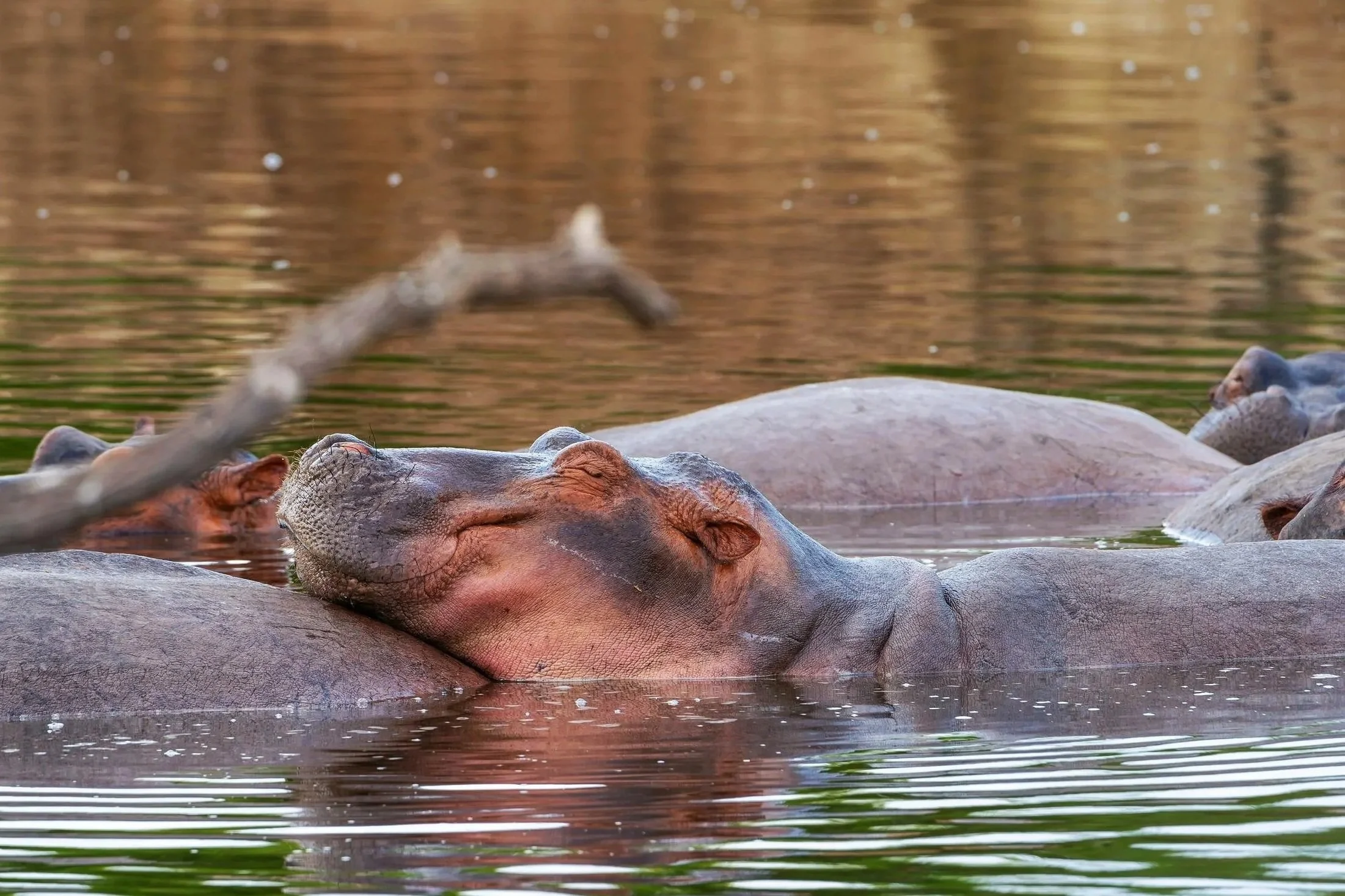
Hippos spend much of the day submerged in rivers and permanent pools, where the water helps keep their sensitive skin cool. They typically emerge after dark to graze on grass, sometimes traveling considerable distances from the water before returning before the heat of the day. A hippo can move quickly on land, despite its enormous size.
Hippos usually live in groups called pods, and watching one can reveal plenty of interaction. Adults jostle for position, mothers stay close to calves, and individuals communicate through grunts, snorts, splashes, and other vocalizations.
When a hippo opens its mouth wide, displaying its huge teeth and powerful jaws, it can be a warning or threat display rather than a sign that the animal is simply tired. Dominant males defend sections of water and can become highly aggressive toward rivals or anything they perceive as a threat. Hippos also mark their territory by spreading dung with rapid movements of their tails.
The Hippo Experience at Moyo
Moyo Camp Warangi: Hippos in the Central Serengeti
Moyo Camp Warangi's location near the Warangi River and Seronera Valley places guests within a landscape shaped by permanent water. The Central Serengeti is particularly well known for its rivers and pools, including the famous Retima Hippo Pool where the Seronera and Orangi rivers meet.
Hippos can be seen throughout the year, but the dry season from June through October can be especially rewarding because water becomes more limited and hippos may concentrate more tightly in permanent pools. A visit can become much more than simply looking at a group of hippos: watch for territorial displays, vocalizations, calves staying close to adults, crocodiles sharing the water, and birds working along the shoreline.
During the green season, higher water levels can allow hippos to spread out more along rivers and pools. The surrounding landscape is also greener and more lush, creating a beautiful contrast between the enormous hippos in the water and the fresh vegetation around them.
Moyo Camp Hembe: Seasonal Water & Changing Landscapes
Moyo Camp Hembe offers access to the central Serengeti's changing network of seasonal waterways. During the rainy months, temporary pools and waterways provide animals with additional sources of water, meaning hippos and other wildlife may be more dispersed across the landscape.
As the dry season progresses, these seasonal sources shrink or disappear, increasing the importance of permanent water. This can create opportunities to see hippos alongside elephants, buffalo, zebra, antelope, crocodiles, and water-associated birds, while predators may be drawn to the same productive areas.
For guests visiting during the calving season, the lush landscape adds another dimension. Although hippos are not part of the migration itself, they share the ecosystem with the enormous concentrations of wildebeest, zebra, and other wildlife moving through the Serengeti.
Moyo Migration Camp Mara: Hippos Along the Mara River
Moyo Migration Camp Mara provides access to the Northern Serengeti and the Mara River, one of the region's most important permanent water sources. The river supports resident hippos throughout the year and becomes especially fascinating during the migration months when enormous herds of wildebeest and zebra move through the region.
From approximately July through October, migration activity can bring thousands of animals into the northern Serengeti. While guests may be hoping to witness a dramatic river crossing, the Mara offers much more: hippos resting in the river, crocodiles along the banks, elephants coming to drink, birds feeding at the water's edge, and resident wildlife using the river throughout the day.
The hippos themselves provide a fascinating counterpoint to the migration. While wildebeest and zebra are constantly moving, hippos remain closely tied to the river, making the Mara their year-round home.
Hippo Safety
Never approach a hippo on foot
Guests should never attempt to walk toward, photograph, or get close to a hippo unless they are in a designated area and following their guide's instructions. Always remain with your guide and follow the park's rules regarding when and where it is safe to leave a vehicle.
Don't get between a hippo and the water
This is particularly important near rivers and pools. Hippos may spend the night grazing on land and return to the water in the morning, so a seemingly empty path can actually be an important hippo route.
Respect their speed
Hippos may look slow because of their enormous bodies, but they can move surprisingly quickly over short distances. Never assume you could outrun one, and never approach one simply because it appears to be resting or moving slowly.
After a day of watching fascinating hippo behavior and exploring the Serengeti, there's nothing better than returning to the comfort of Moyo Tented Camp, where you can reflect on the day's incredible encounters and recharge for tomorrow's adventure.
Come admire hippos safely with us in any season.