
Birds…Birds! BIRDS!
“You must have the bird in your heart before you can find it in the bush. ”
For bird lovers, a stay at Moyo Tented Camp offers more than luxury in the wild, it places you in the heart of one of Africa’s most extraordinary birding destinations. Wake each morning to a chorus of birdsong and discover the Serengeti’s remarkable world of birds right from your private veranda.
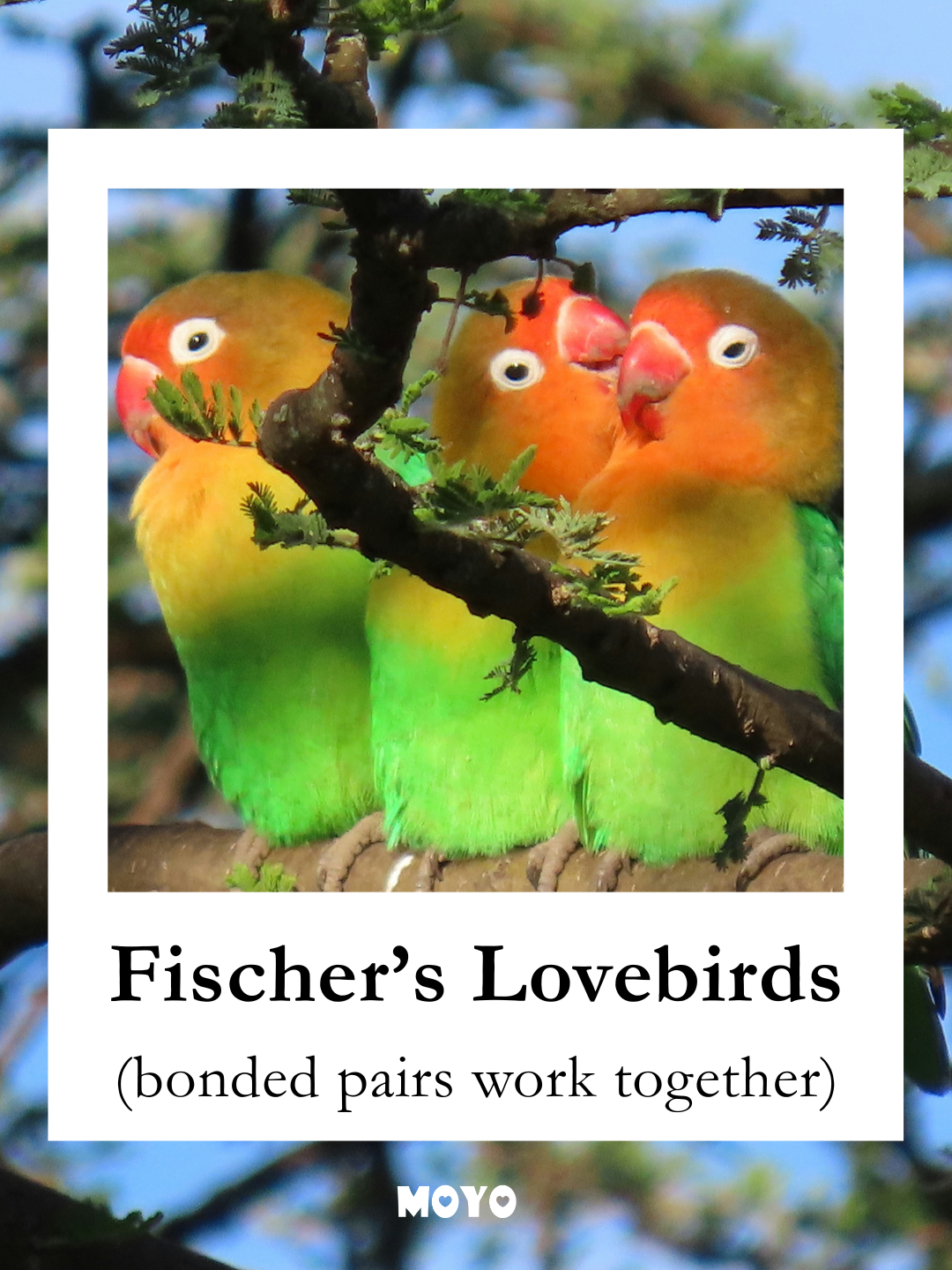
Small, colorful, and full of personality, Fischer's lovebirds are one of the Serengeti's most charming birds. Their bright green bodies, orange faces, golden-yellow chests, and striking white eye-rings make them easy to recognize, while their playful behavior makes them a favorite among birdwatchers. These highly social parrots are almost always seen in pairs or small flocks, and their strong pair bonds inspired the name "lovebird." They communicate with constant cheerful chirps, feed on seeds, grasses, berries, and fruits, and often nest in tree cavities, where they work together to raise their young.
Fischer's lovebirds are most active in the early morning and late afternoon. Look for them in acacia woodlands, open savanna, and around water sources, and listen for their lively, high-pitched calls to locate them.
Photo Credit to Michael Wilcox
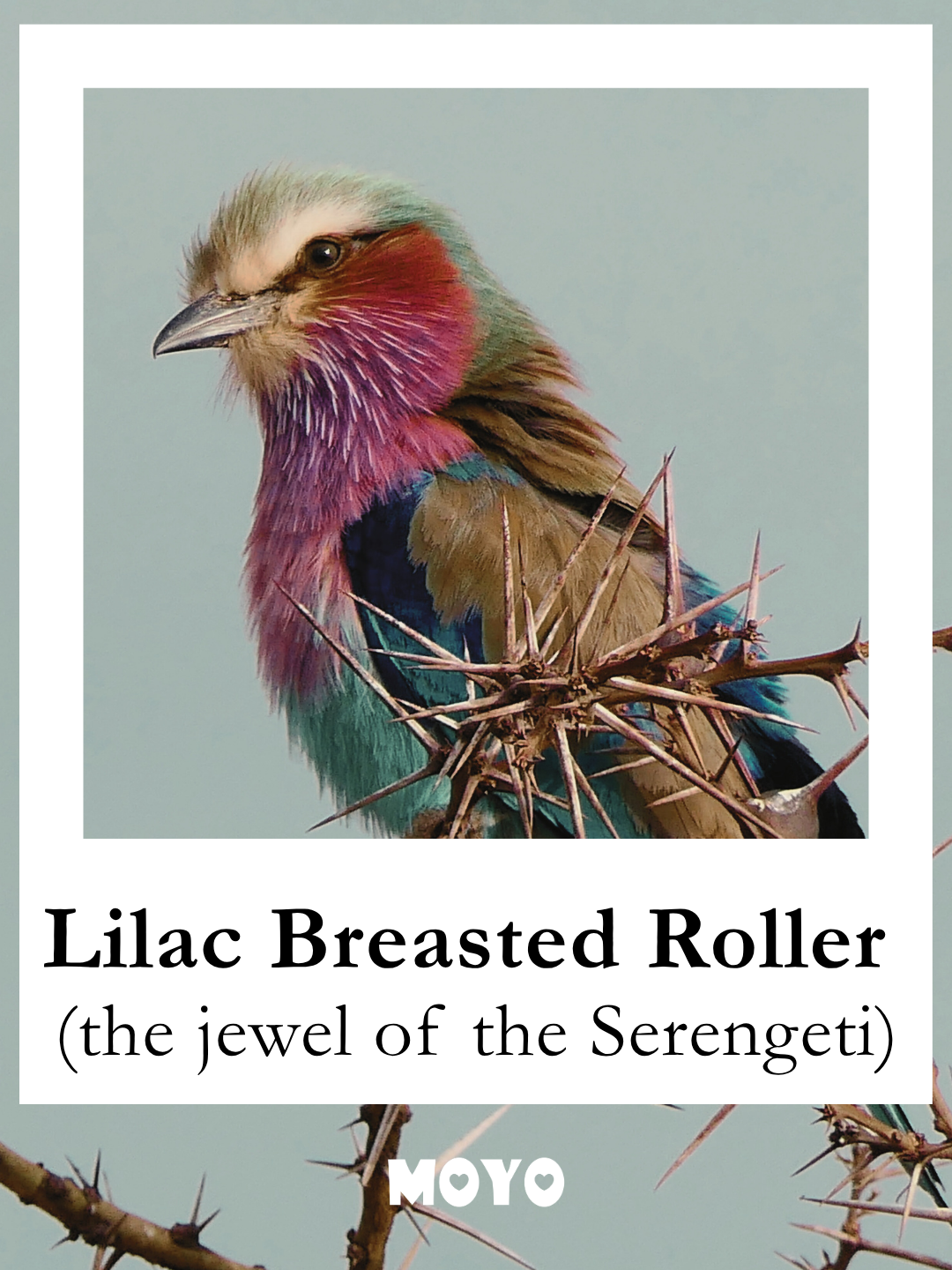
In Swahili, it's called "Kambu" and is a sign of good luck. The lilac-breasted roller is one of the Serengeti’s most striking birds, famous for its vivid mix of turquoise, lilac, green, and blue feathers that seem to glow in the sunlight. Often called the “rainbow bird,” it is known for its dramatic courtship flights, where it swoops, rolls, and dives through the air in acrobatic displays. Despite their bright appearance, they are skilled hunters, feeding on insects, small reptiles, and even small rodents, which they catch by swooping down from a perch.
Look for lilac-breasted rollers perched on exposed branches, fence posts, or treetops along open savanna and woodland edges. They’re often easiest to spot during morning and late afternoon when they hunt from high vantage points.
Photo Credit to Bradley Feller
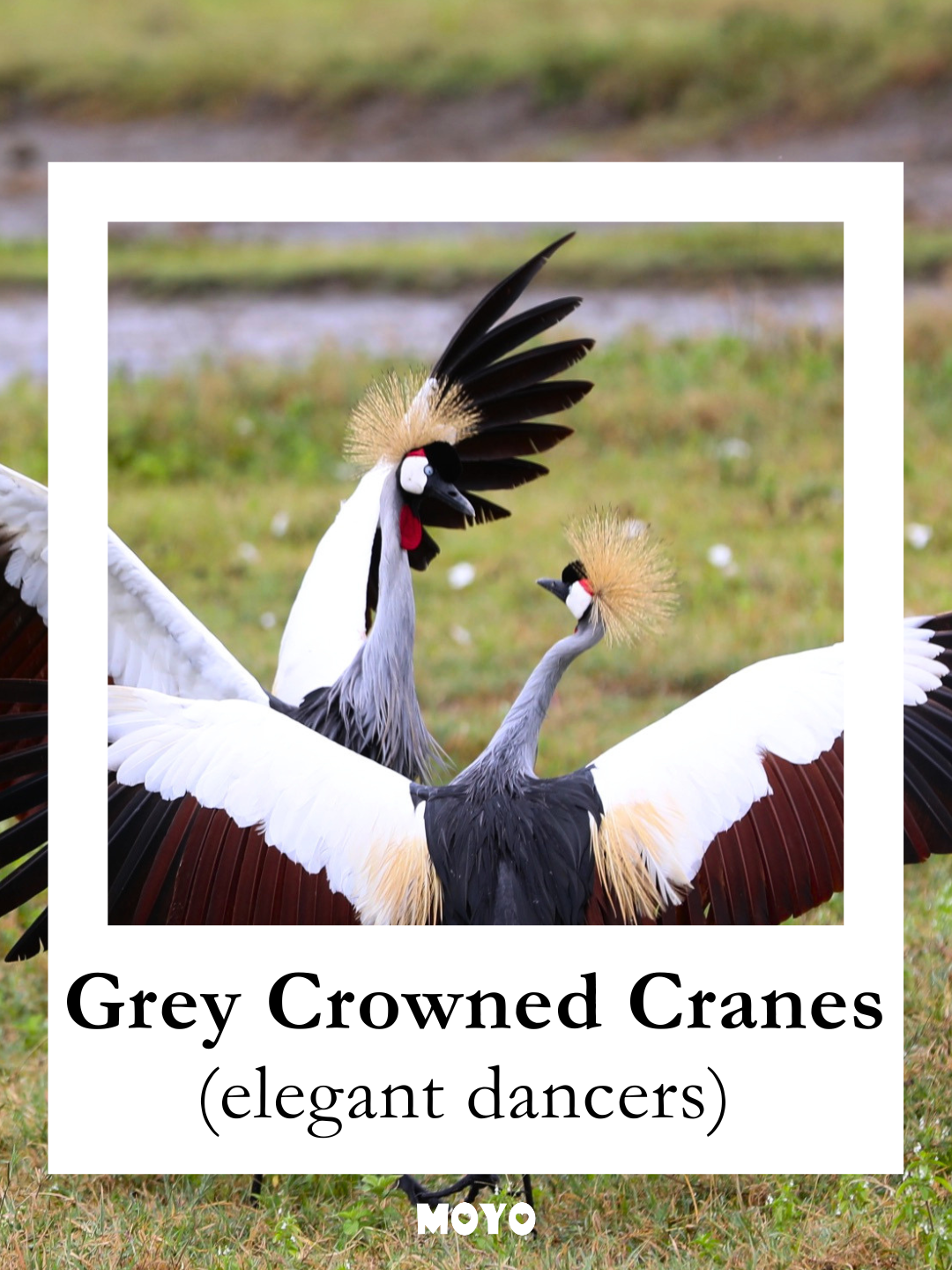
Grey crowned cranes are among the Serengeti's most elegant and recognizable birds, famous for the striking golden crown of stiff feathers that gives them their regal appearance. Unlike most cranes, they can perch in trees thanks to their long, grasping hind toes, where they often roost at night to stay safe from predators. They are also known for their elaborate courtship displays, which include graceful dancing, bowing, jumping, and wing-flapping accompanied by loud trumpeting calls. These omnivorous birds feed on seeds, insects, frogs, reptiles, and small mammals, often following grazing animals that flush insects from the grass.
Grey crowned cranes are most often found in wetlands, floodplains, and grassy areas near rivers and seasonal waterholes.
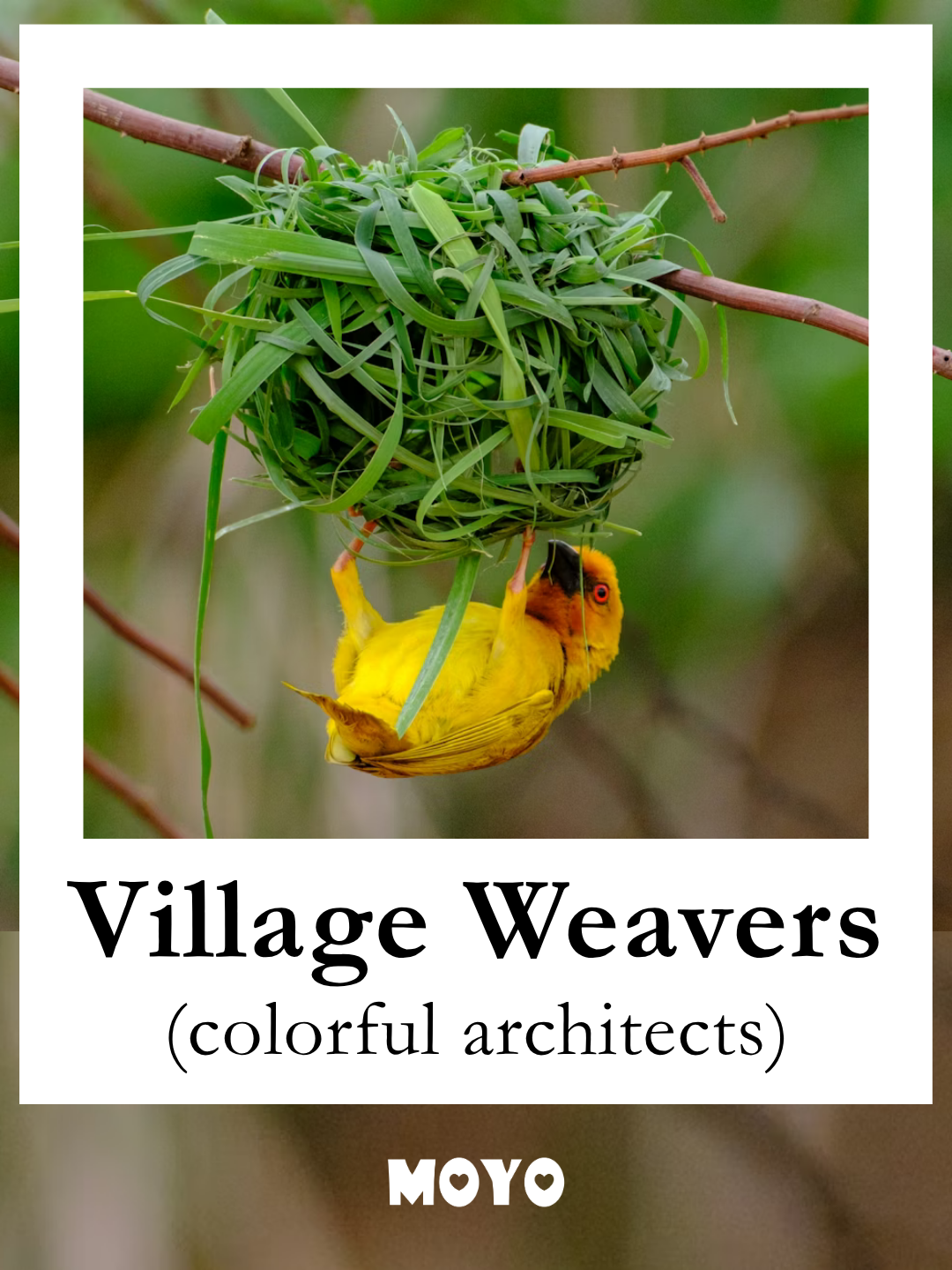
Village weavers are among the Serengeti's most fascinating little architects. During the breeding season, males transform into brilliant yellow with a dark face mask and weave intricate hanging nests from strips of fresh grass using only their beaks. A single male may build several nests to impress potential mates, who carefully inspect each one before deciding whether it's good enough. If a female isn't impressed, he'll often tear it down and start again. Outside the breeding season, their plumage becomes much duller, making these clever birds difficult to recognize.
The easiest time to spot village weavers is during the breeding season (March–May), when males are brightest and colonies are most active. Look for their woven nests in acacia trees near water.
Photo Credit to Unsplash
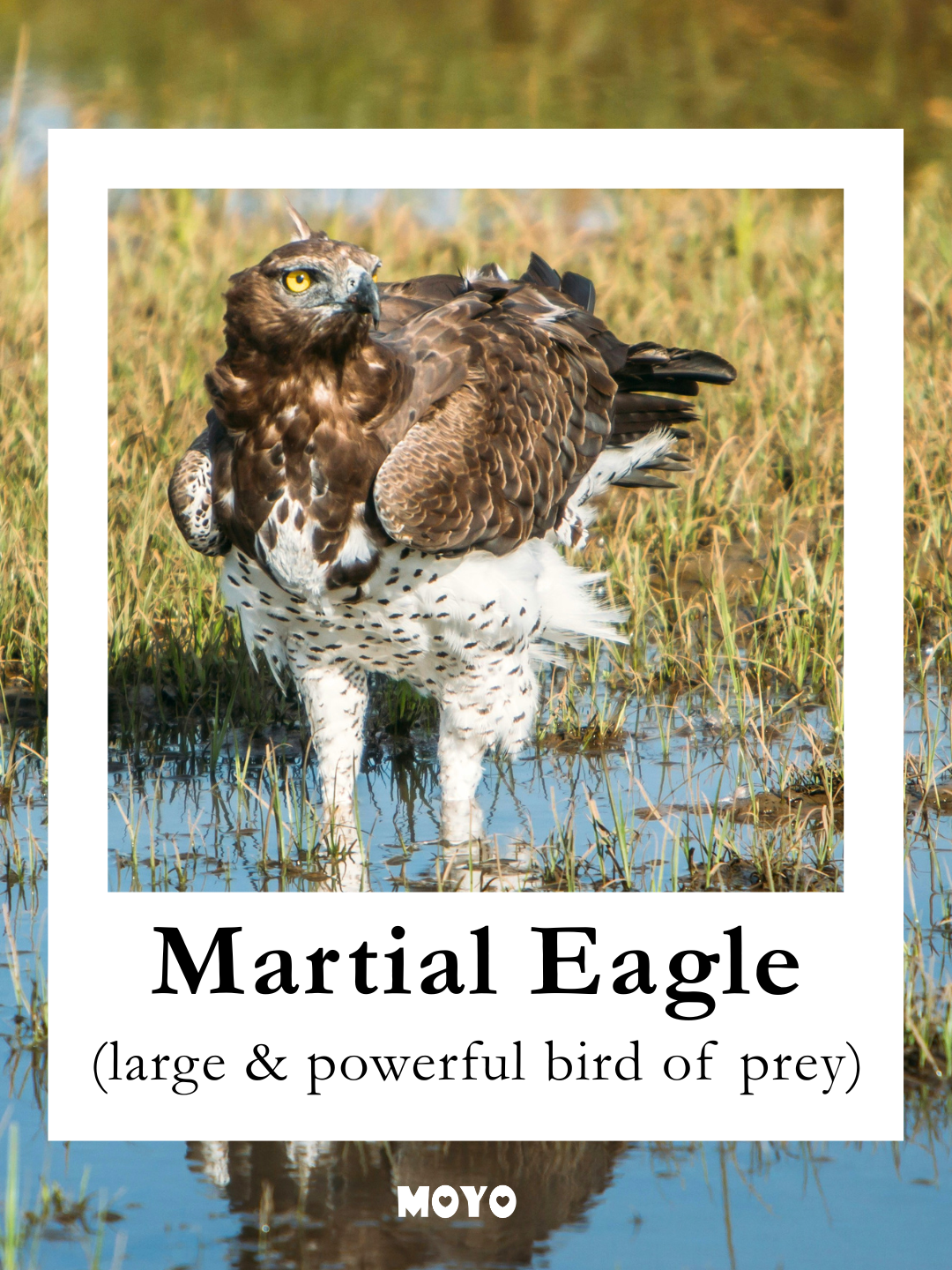
The martial eagle is Africa's largest eagle and one of the Serengeti's most powerful birds of prey. With a wingspan reaching over 2 meters (6.5 feet), exceptional eyesight, and immense strength, it can spot prey from great distances before swooping down at remarkable speed. Its diet is incredibly varied, including hares, monkeys, large birds, reptiles, and even young antelope. Although it is a formidable hunter, the martial eagle spends much of its day soaring effortlessly on warm air currents or perched high in a tree, scanning the plains below with incredible patience.
The best chance of spotting a martial eagle is early morning or late afternoon, when they are hunting or soaring. Scan tall acacias and rocky outcrops where they perch, and use binoculars as they often soar high.
Photo Credit to Rafael Peier
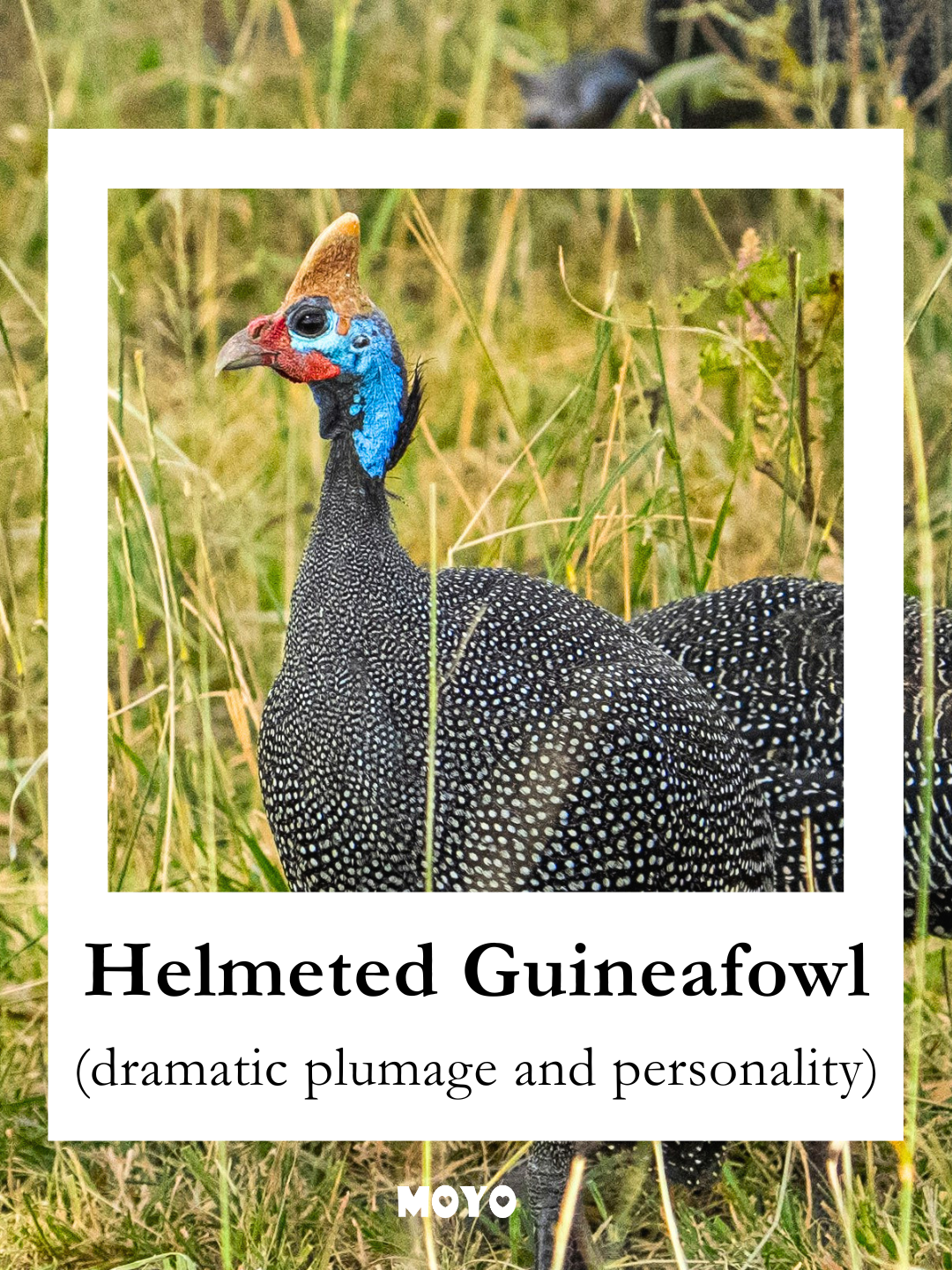
Helmeted guineafowl are among the Serengeti's most entertaining birds, rarely seen alone and almost always traveling in noisy flocks that can number from a dozen birds to well over 100. Their distinctive blue heads, white-speckled black feathers, and bony "helmet" make them easy to recognize as they march across the savanna in search of seeds, bulbs, berries, and insects. Although they can fly, they prefer to run and are surprisingly fast on the ground, only taking to the air when startled or to roost safely in trees at night. Their constant chatter also serves as an early warning system, often alerting other wildlife to nearby predators.
Helmeted guineafowl are easy to spot thanks to their loud calls and social flocks. The Seronera Valley in the central Serengeti offers great year-round sightings, often alongside zebras, giraffes, and antelope as they forage across the plains.
Photo Credit to Mana Amir
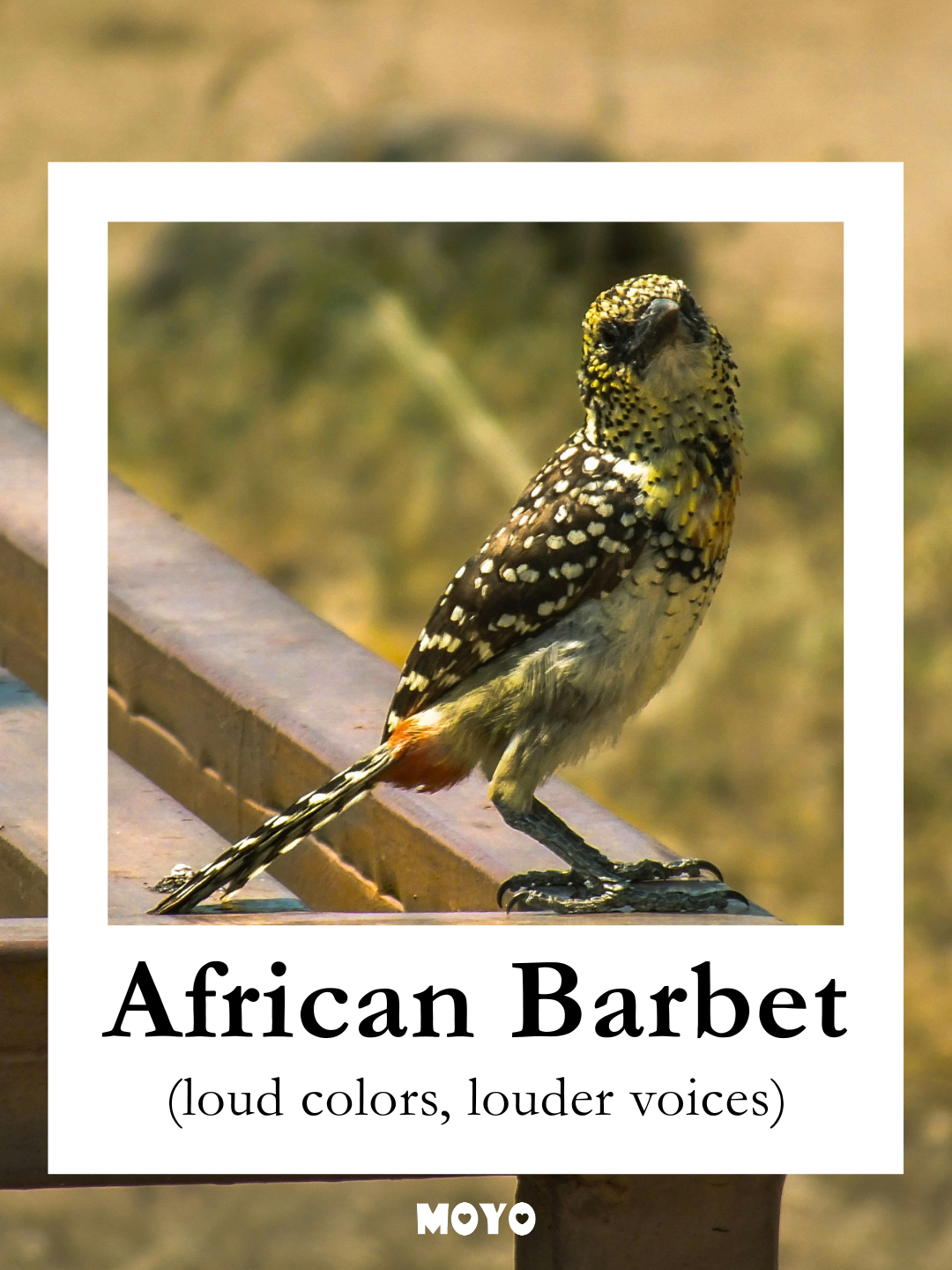
African barbets are among the Serengeti's most colorful and charismatic birds, known for their bold plumage, oversized heads, and surprisingly loud calls. Despite their cheerful appearance, they're expert excavators, chiseling nesting cavities into dead trees using their strong, chisel-like bills. Many species also play an important ecological role by spreading seeds after feeding on figs and other fruits, helping regenerate the Serengeti's woodlands. While fruit makes up much of their diet, they'll also happily eat insects, making them adaptable feeders throughout the year.
The best time to spot African barbets is early morning, when their distinctive calls echo through the woodlands. Scan the tops of trees, especially fruiting fig trees, where they often perch to feed or call.
Photo Credit to Shashank Maggirwar
Time to plan the birdwatching adventure of a lifetime…