
“The best accommodations on our safari adventure...From our deck we were able to watch giraffes and elephants. Highly recommend this location.”
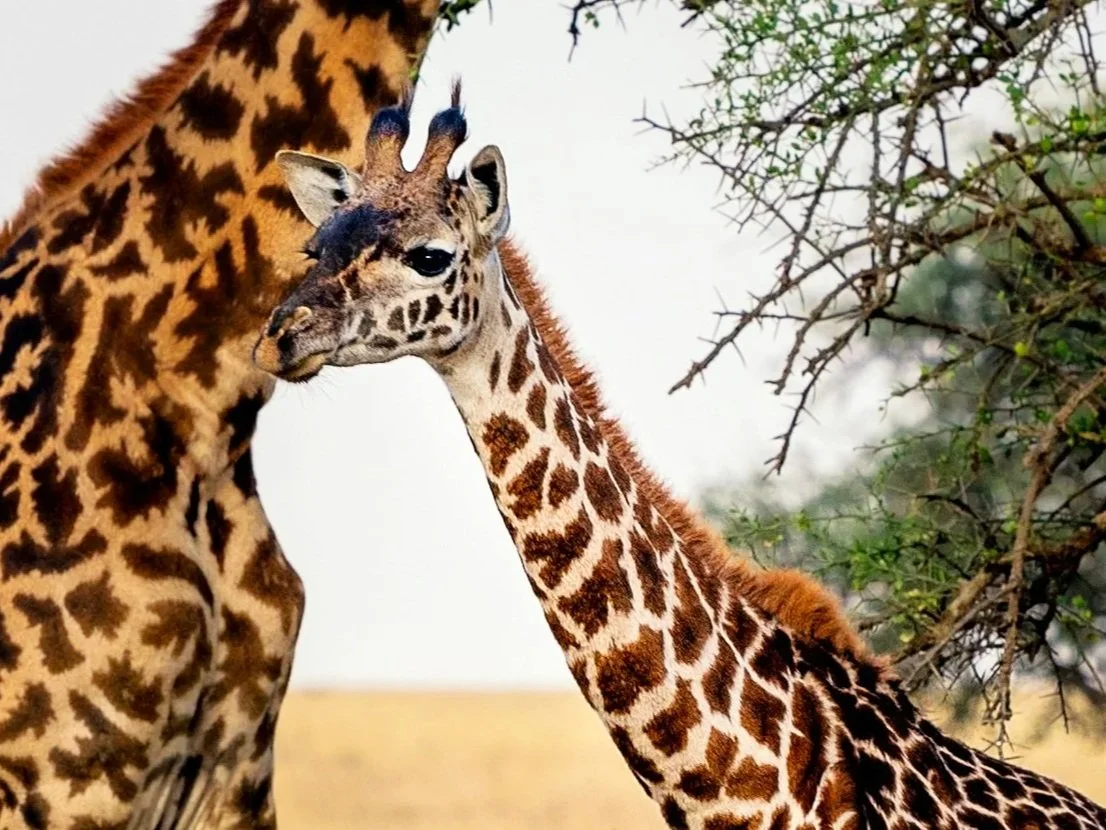
Safari guests may be lucky enough to spot a giraffe calf alongside its mother - sometimes giraffe families even graze right by Moyo camps.
Photo Credit to Hu Chen
When and Where to Spot Them
Unlike some migratory animals, giraffes live in the Serengeti throughout the year, meaning there is no single calving season to plan your safari around. Female giraffes can give birth at any time of year, although births may occur more frequently during certain periods depending on local conditions.
Giraffes prefer habitats with plenty of acacia trees and other browse, making woodland edges, open savannas, and areas dotted with scattered trees particularly good places to look. Across the Serengeti, keep an eye out for mothers accompanied by smaller giraffes, especially in areas where herds gather to feed.
Guests exploring the central Serengeti around Moyo Camp Warangi and Moyo Camp Hembe may encounter giraffes moving between woodland and open grassland habitats. In the northern Serengeti, around Moyo Tented Camp Mara, giraffes can also be spotted throughout the year, often silhouetted beautifully against the rolling landscape.
Fascinating Facts About Giraffe Calves
Giraffe calves have some remarkable adaptations that help them get started in life. Although they may look a little uncoordinated at first, they are surprisingly capable from the moment they are born.
A dramatic first arrival: Giraffe calves are born standing up, entering the world with a fall of approximately six feet (1.8 meters) as their mother gives birth.
Already impressively tall: Newborn giraffes are usually around six feet tall, making them taller than many adult humans!
Quick on their feet: Calves can generally stand within an hour of birth and begin walking soon afterward.
A protective mother: Young giraffes stay close to their mothers, relying on them for nourishment and protection during their early months.
Growing up in a group: Giraffe mothers sometimes gather with other females and their young in loose nursery groups, allowing calves to interact and play while adults keep watch.
One particularly interesting behavior is called ossicone development. The small horn-like structures on a giraffe's head, known as ossicones, are present at birth but initially lie flat against the head to avoid injury during delivery. They gradually become more upright as the calf grows.
Tips for Observing Giraffe Calves
Spotting a giraffe calf can require a little extra patience. Their smaller size makes them easier to overlook among adult giraffes, particularly when they are standing close to their mothers or partially hidden by vegetation.
Look for smaller silhouettes: When scanning a group of giraffes, pay attention to animals with shorter necks and smaller bodies.
Watch the mothers: A female giraffe accompanied by a youngster is often the easiest way to identify a calf.
Bring a zoom lens: A telephoto lens allows you to photograph calves from a respectful distance without disturbing their natural behavior.
Look for playful interactions: Young giraffes can be curious and energetic, occasionally running, playing, and testing their growing legs.
Be patient and give them space: Avoid crowding mothers and calves or positioning vehicles too closely. A calm, respectful approach offers better opportunities to observe natural behavior.
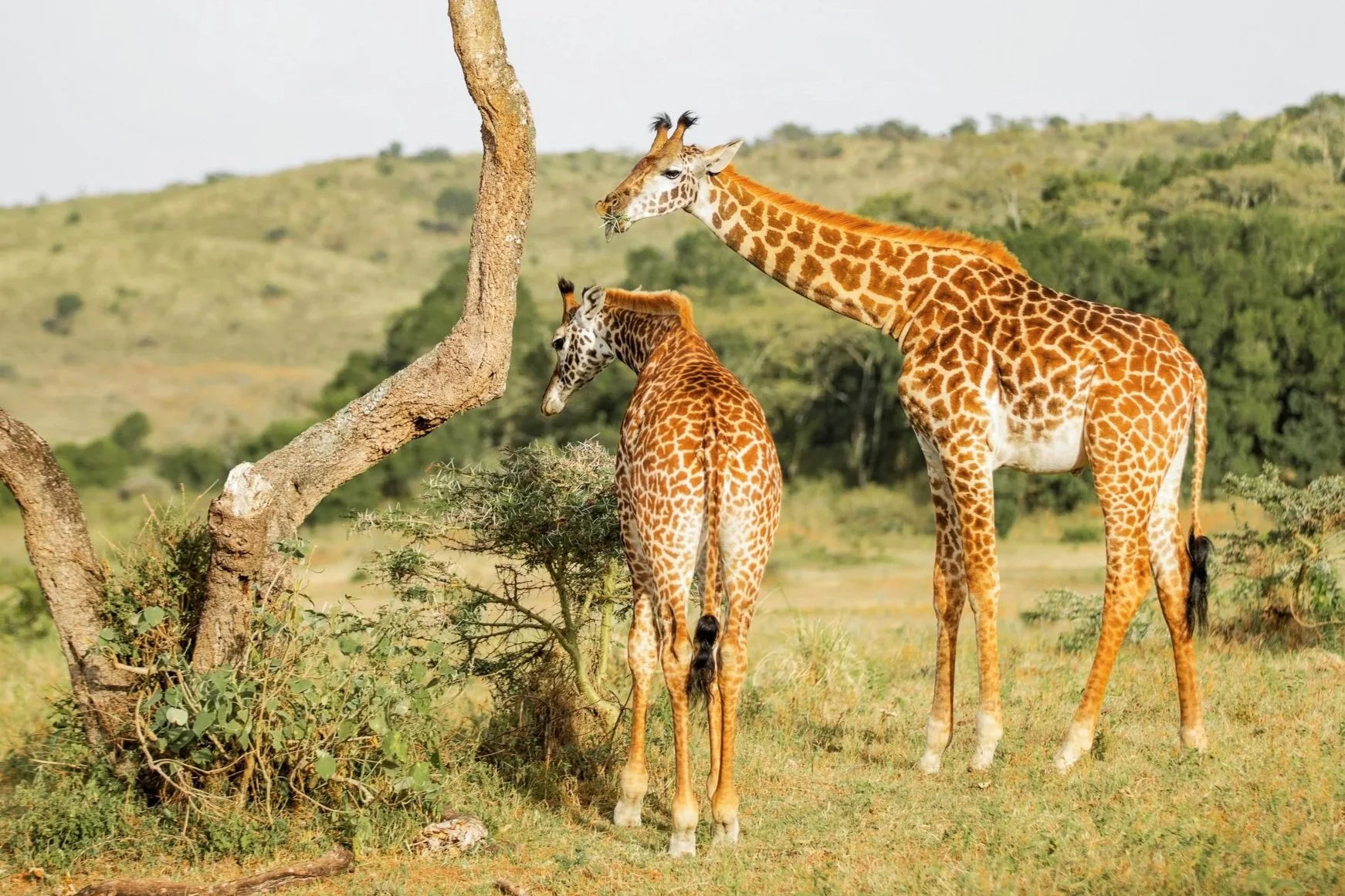
With Moyo Tented Camp's prime Serengeti locations and comfortable luxury accommodations, you can spend your days searching for giraffe families in the wild and return to a relaxing safari retreat with hot showers, hot meals, and fresh laundry.
Photo Credit to Moses Londo
Come see giraffe families as nature intended.