
Nile Monitors: Serengeti’s Dragons
“Our task must be to free ourselves by widening our circle of compassion to embrace all living creatures and the whole of nature and its beauty”
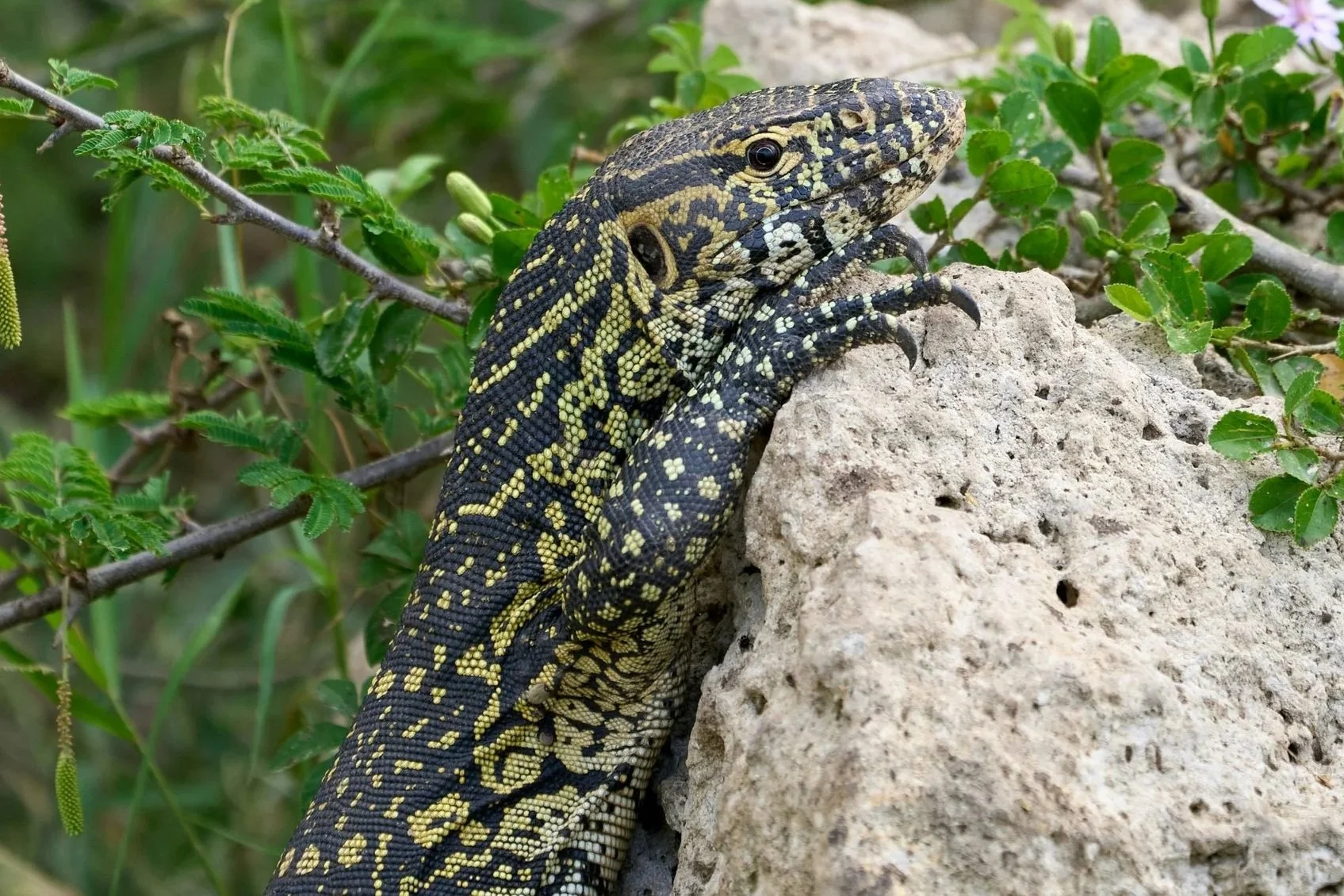
With its muscular body, long tail, sharp claws, and striking markings, the Nile monitor looks almost prehistoric.
Whether you spot one basking beside the Warangi River, disappearing into the water, climbing a tree, or moving through the grass in search of its next meal, encountering this remarkable reptile offers a glimpse into the wild and often overlooked side of the Serengeti.
Photo Credit to Dmitrii Zhodzishskii
Amazing Nile Monitor Facts
They're among Africa's largest lizards. Nile monitors can reach around 2 meters (6.5 feet) or more in total length, including their long, muscular tails. Their powerful bodies, strong legs, and sharp claws make them formidable predators.
They're excellent swimmers. Their laterally compressed tails act almost like paddles, helping propel them through the water. When threatened, a Nile monitor will often make a dash for the nearest water and can disappear quickly.
They can climb, too. Despite their size, Nile monitors are capable climbers. They may climb trees to bask, forage, or escape danger, giving them an impressive range of movement between land and water.
Their tongue helps them “taste” the environment. Like snakes, Nile monitors have a forked tongue that collects chemical information from their surroundings. They then use a specialized organ in the roof of the mouth, called the Jacobson's organ, to help interpret those chemical cues.
They'll eat almost anything they can catch. Nile monitors are opportunistic carnivores with an incredibly varied diet. Depending on what is available, they may eat fish, frogs, insects, crabs, mollusks, birds, eggs, small mammals, turtles, other reptiles, and carrion.
They are surprisingly clever nest raiders. One of the Nile monitor's most remarkable behaviors involves crocodile nests. Researchers have observed monitors working together around crocodile nests, with one animal distracting the guarding crocodile while another raids the nest for eggs.
Their babies start life brilliantly colored. Young Nile monitors can have striking black-and-yellow patterns that become much more subdued as they mature. The bright coloring makes a young monitor look very different from the grayish or olive-brown appearance of many adults.
They are built for both hunting and escaping. A Nile monitor's strong claws, muscular tail, powerful jaws, and speed make it an effective predator. But when threatened, its first choice is usually to escape (often by sprinting toward water).
Tips for Spotting Nile Monitors
Look along the water's edge. Scan riverbanks, rocks, fallen trees, and exposed branches for a large lizard basking in the sun. Nile monitors often choose prominent sunny locations where they can warm themselves while keeping an eye on their surroundings.
Check the trees. Don't assume that a large lizard will always be on the ground. Nile monitors can climb, and young individuals in particular may be found on branches overhanging water.
Watch for movement. Their coloring provides effective camouflage, especially among rocks, mud, vegetation, and dry grasses. A flick of a long tail or the movement of a lizard slipping between vegetation may be the first indication that one is nearby.
Ask your Moyo guide to look for them. Experienced local guides know the habitats where reptiles are most likely to be found and can help guests spot animals that might otherwise blend into the landscape.
Be patient around water. If you see a Nile monitor basking, give it space and observe quietly. They are generally wary and may flee into the water when approached too closely.
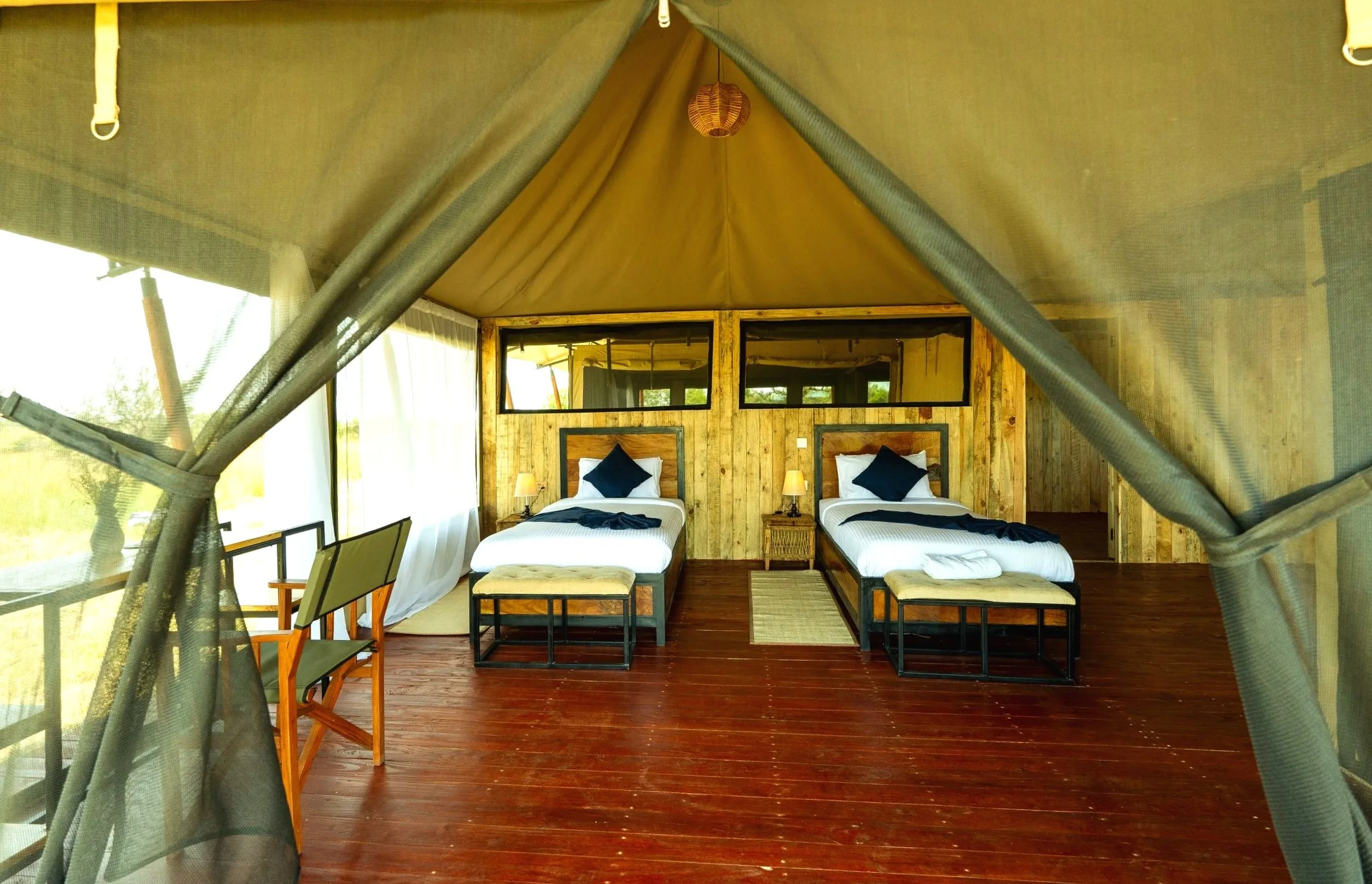
Whether you spot a Nile monitor during a game drive or head out on a dedicated herping safari in search of the Serengeti’s fascinating reptiles, there’s nothing better than returning to Moyo after a day of discovery.
Enjoy a private en-suite bathroom with a hot shower, a delicious freshly prepared meal, and a comfortable plush bed - the perfect way to unwind after exploring the wild.
Come see Serengeti’s Dragon in person.